Cost & Pricing
All-Inclusive Yacht Charters in Indonesia: What’s Really Covered
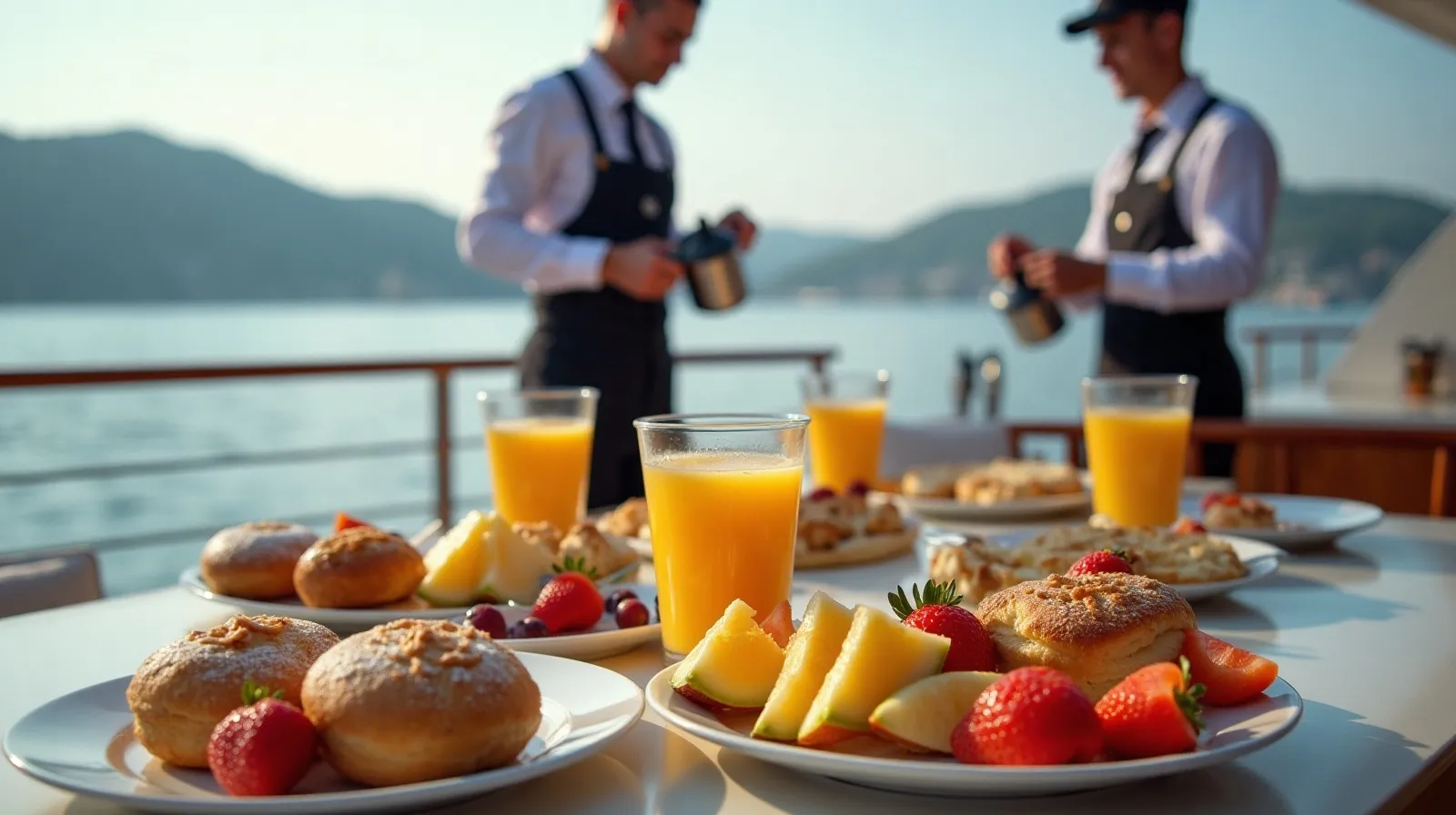
“All-inclusive” on an Indonesian yacht charter is a pricing model, not a luxury tier — and knowing exactly what sits inside the phrase is worth thousands of dollars. The market runs two structures: genuinely all-in rates (one number covers crew, meals, fuel for a fixed route, park fees) and base-plus-APA rates where consumables are advanced and reconciled. Both are legitimate; they suit different trips, and the full rate architecture is laid out on the Indonesia charter cost and rates guide.
The inclusion matrix
| Item | True all-in | Base + APA |
|---|---|---|
| Crew & service | Included | Included |
| Full-board meals | Included | Included (provisioning via APA) |
| Fuel | Included for stated route | APA, metered to actual burn |
| Park & landing fees | Included | APA at cost |
| Airport/harbour transfers | Usually included | Sometimes APA |
| Alcohol | House selection only | APA or corkage |
| Dive programme | Often an add-on | Add-on or APA |
| Crew gratuity | Never included | Never included |
All-in vs APA: when each wins
All-in pricing wins on fixed, well-trodden routes — a standard Komodo loop or Gili circuit — where the operator can price fuel and fees accurately and you value certainty over itemisation. APA pricing wins on custom or long routes: you pay actual consumption rather than the operator’s padded estimate, see an itemised reconciliation at disembarkation, and keep the flexibility to change the route mid-trip (the fuel simply meters accordingly). Rule of thumb: fixed route, take all-in; bespoke or expedition route, prefer the APA model and read its terms.
Example all-in budgets
Working numbers for a whole-boat crewed charter, mid-market phinisi or catamaran, six to ten guests. Three days Gili–Lombok: USD 6,000–14,000 all-in. Five days Komodo: USD 12,500–30,000 all-in including park fees. Seven days Komodo or Wakatobi: USD 17,500–45,000 all-in. Luxury-tier vessels multiply those bands by two to four; per-cabin bookings divide differently. What moves the number most is vessel class, then route length, then season — not the inclusion model itself.
Questions that expose a vague quote
Four questions turn any quote transparent. Which route legs is fuel priced for, and what happens if we change them? Are Komodo or Raja Ampat park fees included per guest per day, or billed after? Is the transfer from the airport included on embarkation day? What alcohol policy applies — house-inclusive, corkage or APA? An operator who answers all four in writing is quoting honestly, whichever model they use; hesitation on any of them is the actual red flag.
Reading a quote like an operator
Put two quotes for the same week side by side and the inclusion models explain most of the gap. A USD 30,000 all-in Komodo quote and a USD 24,000-plus-APA quote may land within a few hundred dollars of each other once the APA reconciles — the first has simply pre-priced the consumables with a certainty margin, the second meters them. Neither is dearer in substance; they allocate risk differently. The operator’s tell is specificity: an all-in quote that names the route legs, the park-fee basis and the alcohol policy has done its arithmetic; one that waves at “everything included” has either padded generously or will discover exclusions later, and both discoveries are yours to fund. On the APA side, the equivalent tell is the estimate: professionals provide a realistic APA projection for your exact route unprompted, because they have run it before.
Two clauses deserve special reading in all-in contracts: the route-change clause (what happens to the fuel assumption if weather reroutes the week — reputable operators absorb it, which is what the margin was for) and the shortfall clause on park fees (fees change by decree; the quote should say who carries an increase). Neither clause is exotic; both are where vague quotes become expensive ones.
Practical checklist before you sign
- Route legs named in writing, with the fuel assumption tied to them.
- Park and landing fees: included per guest per day, or excluded and estimated — never silent.
- Transfers: airport-to-boat on both ends, or priced separately.
- Alcohol: house-inclusive list visible, corkage terms stated, or APA-metered.
- Dive programme: included dives per day, gear rental, nitrox — itemised if diving matters to you.
- Gratuity: never inside any quote; budget 5–10% separately.
- Weather policy: reroute-not-refund is standard — confirm the rerouting is captain’s-choice quality water.
Read this way, the all-inclusive question stops being a pricing puzzle and becomes what it should be: a transparency test the good operators pass in one email.
The bottom line generalises beyond Indonesia but matters most here, where consumables are a genuine share of cost: inclusion models are risk allocation, not generosity. Buy certainty on fixed routes, buy metering on bespoke ones, and judge operators by the specificity of their answers rather than the warmth of their adjectives — the one-email transparency test that never fails.
Quick answers
What does all-inclusive cover on an Indonesian charter?
Typically crew, full-board meals, fuel for the stated route, park and landing fees, and transfers. Alcohol beyond a house selection, dive programmes and crew gratuity almost always sit outside the number.
Is all-inclusive better than APA pricing?
For fixed standard routes, yes — you buy certainty. For custom or expedition routes the APA model is usually fairer: you pay actual consumption with an itemised reconciliation.
How much is an all-inclusive Komodo charter?
Whole-boat mid-market vessels run about USD 12,500–30,000 for five days or USD 17,500–45,000 for seven, including park fees. Luxury tiers price two to four times higher.
Related briefs
Continue with APA Explained and Conservation and Marine Park Fees for Yachts in Indonesia.
Want this route priced for your dates? Message the Indonesia Yacht Charter desk on WhatsApp +62 811-3941-4563 or email [email protected] for routes, vessels and honest USD quotes within 48 hours.
Chart your Indonesian passage
Tell us your dates, group and the water you want under the keel. The desk replies on WhatsApp with routes, vessels and an honest USD quote.