
Boat Types
Cabin Phinisi Charters: Sharing a Traditional Yacht Without Booking the Whole Boat
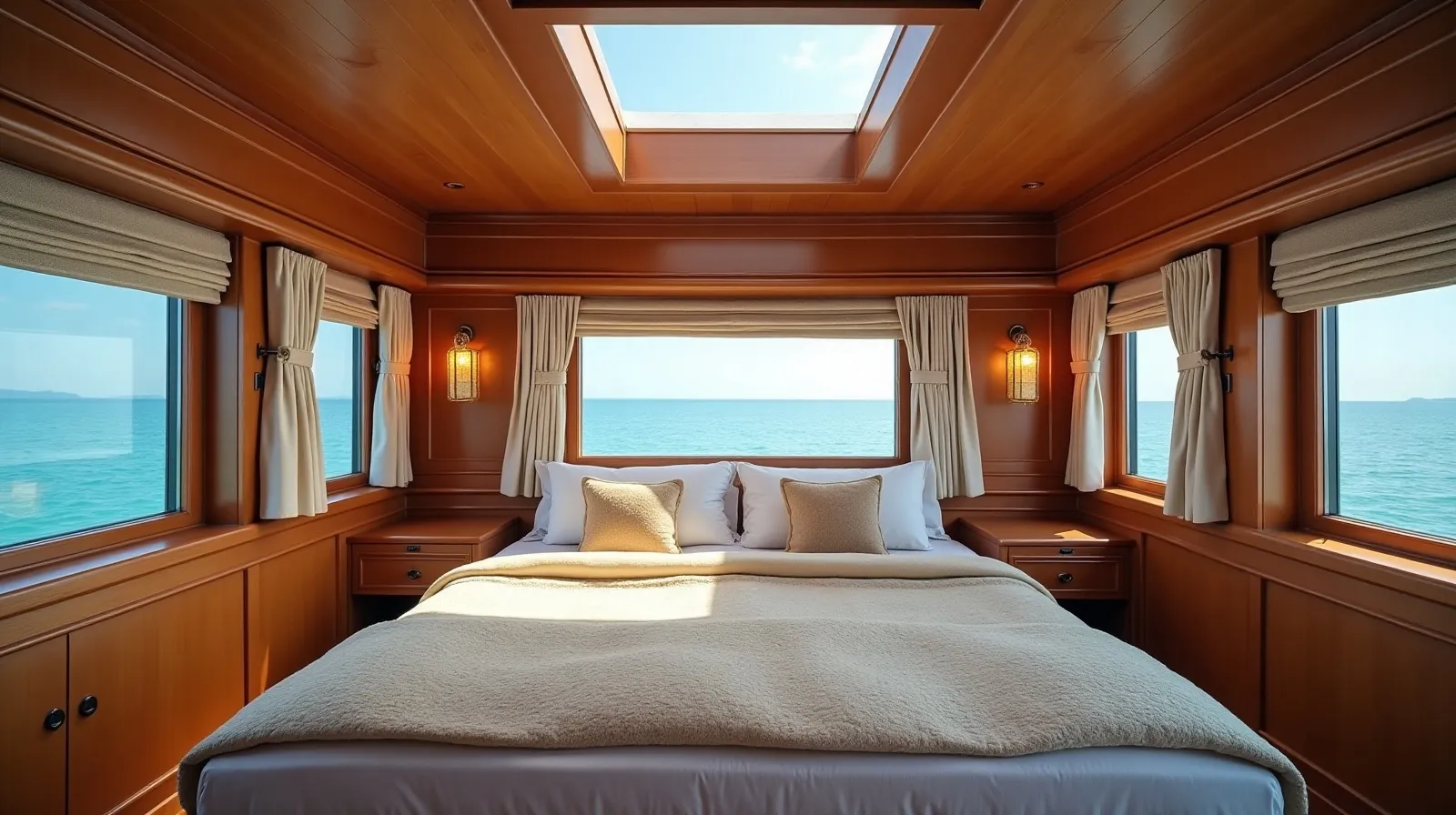
Sharing a phinisi by the cabin is how most travellers first sleep aboard Indonesia’s signature schooner: scheduled departures sell each cabin separately, so a couple buys a stateroom on a 40-metre wooden ship for the price of a good resort room. The format is excellent — with two honest caveats about layout and acoustics that this guide covers squarely, alongside the class context from the boat types comparison tables.
Phinisi cabin layouts, honestly described
| Cabin type | Where | Reality |
|---|---|---|
| Master / owner’s cabin | Full-beam aft, main deck on some builds | Panoramic windows, 18–25 m², the photograph you saw |
| Deck cabins | Main or upper deck | Windows and light; some engine and deck noise |
| Lower-deck cabins | Below waterline sections | Portholes or none; coolest and darkest; most motion-stable |
| Bunk / twin shares | Lower deck forward | Compact, priced accordingly |
The master cabin with ocean-view windows is the layout phinisi marketing is built on — and on scheduled departures it books first, often at nearly double the standard cabin rate. If the trip is a celebration, that supplement is usually the best money on the invoice.
Sound insulation: the honest paragraph
Wooden ships transmit sound — it is physics, not negligence. Generator and engine noise reaches lower-deck cabins as a hum on passages and during evening generator hours; anchor chain rumbles forward at dawn; deck footsteps carry into cabins beneath the saloon. Top-tier builds mitigate seriously (insulated engine rooms, generator scheduling, rubber-mounted machinery) and the difference between tiers is real. Light sleepers should ask two questions before booking: generator hours overnight, and which cabins sit furthest from machinery — then bring earplugs anyway and be pleasantly surprised.
Phinisi vs modern yacht for a shared trip
Against a modern liveaboard or motor yacht on the same per-cabin route, the phinisi trades measurable comforts for unmeasurable ones. The modern hull is quieter, more stabilised, its cabins more standardised; the phinisi gives triple the deck space per guest, sail-assisted passages, and the fact — felt daily — that the ship itself belongs to the archipelago it sails. Divers on a dive-count mission often prefer the modern hull via the dive liveaboard circuit; travellers for whom the ship is part of the destination choose the schooner and do not look back.
When to take the whole boat instead
The per-cabin phinisi format suits couples and solo travellers on marquee routes — Komodo April–November, the east in its season. From about three cabins’ worth of party, whole-boat charter starts winning: route control, your own schedule, no strangers at dinner, often comparable per-head cost on boutique 4-cabin boats. That decision maths, and the full charter-format menu, sits with the route planner tables and the cost guide — the cabin format is the doorway; many guests walk through it once and charter whole ever after.
Getting the best week from a shared schooner
A few practised habits separate the guests who merely enjoy a shared phinisi from those who get its full value. Board with the ship’s rhythm rather than against it: the crew’s day starts before dawn and the vessel’s best hours — first light on deck, the sail-set after breakfast, the anchor-light quiet after dinner — belong to guests who show up for them. Learn three crew names on day one; the service on Indonesian boats is relational, and it compounds. Claim the deck spaces the brochure under-sells: the bowsprit net at passage, the aft deck at sunset — cabin category matters less than deck literacy on a schooner. And use the cruise director as the concierge they are: cabin guests who ask for the extra village walk, the dawn tender to the viewpoint, the birthday surprise, generally get it — the shared format’s programme has more flex than its schedule implies.
Cabin-selection craft, refined: on most phinisi layouts, the aft lower cabins sit nearest machinery, the forward lowers get the anchor chain at dawn, and the mid-lowers are the quiet compromise; deck cabins trade some night noise for windows and breeze. Ask for the general-arrangement plan — operators share it happily — and choose with the trade-offs visible.
Practical notes for shared phinisi guests
- Pack soft and light: cabin stowage is clever but finite, and decks are barefoot territory.
- Earplugs and a sleep mask cost nothing and defuse the wooden ship’s honest acoustics.
- Seasickness: treat preventively for the first night; phinisi motion is gentle but real.
- Sun discipline: the deck acreage that sells the boat also burns the unwary — rash guards over resolve.
- Cash: small notes for village purchases and the crew tip envelope at the end.
- The tip convention: 5–10% of your fare into the shared crew pool — the format’s one universal custom.
Approached with those habits, a shared cabin buys what the whole-boat market pays multiples for: the schooner life itself — and it converts more future whole-boat charterers than any brochure ever printed.
Quick answers
Can you book just one cabin on a phinisi?
Yes — scheduled phinisi departures sell cabins individually with meals and the guided programme included, mostly on Komodo and eastern-season routes. Masters with ocean-view windows book first.
Are phinisi cabins noisy?
Wooden hulls transmit some machinery and deck sound, especially to lower-deck cabins; top builds mitigate with insulated engine rooms and generator scheduling. Ask about generator hours and cabin position — and pack earplugs.
Is a phinisi or a modern liveaboard better for a shared trip?
Modern hulls are quieter and more standardised; phinisi offer far more deck space and the archipelago’s own maritime tradition. Dive-count divers lean modern; experience-first travellers lean phinisi.
Related briefs
Continue with Dive Liveaboard Yachts in Indonesia and Comparable Expedition Yachts in Indonesian Waters.
Planning a charter around this? Message the Indonesia Yacht Charter desk on WhatsApp +62 811-3941-4563 or email [email protected] for routes, vessels and honest USD quotes within 48 hours.
Chart your Indonesian passage
Tell us your dates, group and the water you want under the keel. The desk replies on WhatsApp with routes, vessels and an honest USD quote.