Routes & Itineraries
Triton Bay Route Notes: Whale Sharks and Liquid Limestone
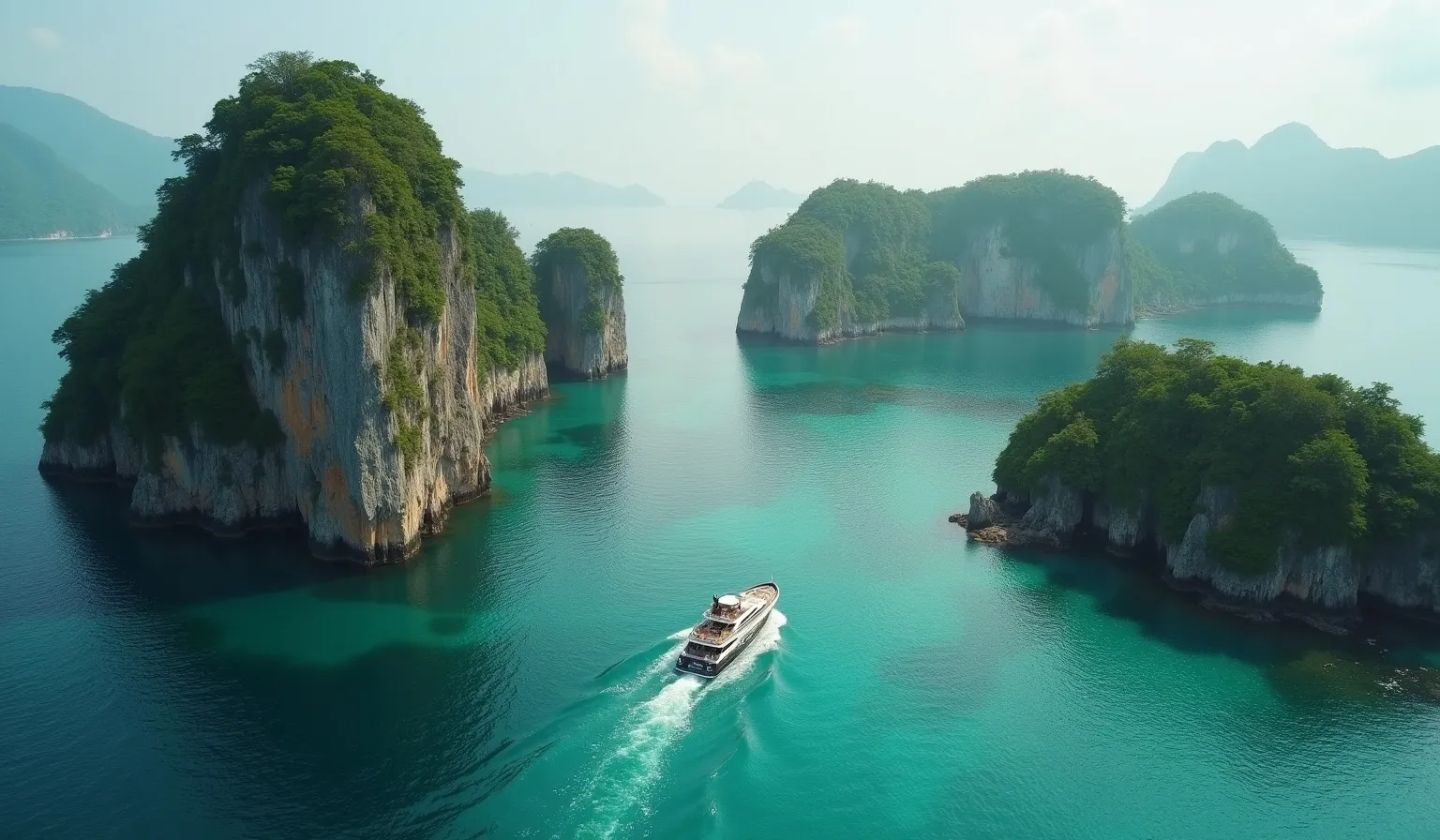
Triton Bay, tucked behind Kaimana on West Papua’s south coast, is the far edge of Indonesian charter routing — a maze of jungle-draped karst islets, soft-coral reefs so dense divers call the water “liquid limestone,” and the bagan fishing platforms where whale sharks feed at dawn. Fewer yachts see it in a year than visit Komodo in a day, which is exactly the appeal. It anchors the Papua frontier section of the route planner’s expedition table.
Getting there and the route shape
| Leg | Distance | Notes |
|---|---|---|
| Kaimana → Namatota strait | ~20 nm | Karst channels, rock-art cliffs |
| Namatota → Saruns / Little Komodo | ~15 nm | Soft-coral gardens at 5–15 m |
| Saruns → Aiduma & Triton core | ~12 nm | Walls, black-coral forests |
| Bagan runs (dawn) | 5–15 nm | Whale sharks at fishing platforms |
Kaimana has daily small-plane connections via Sorong or Ambon, drum fuel and a working market — the only logistics node on this coast. Everything beyond it is vessel-supported wilderness.
The bagan whale sharks
Triton’s signature encounter is engineered by local fishing culture: bagans — lift-net platforms — attract baitfish overnight, and whale sharks come to siphon the nets at first light. Crews negotiate directly with bagan fishermen (a payment per encounter is customary and fair), guests slip in on snorkel, and the sharks often stay for hours. It is the most reliable whale-shark encounter in Indonesia after Cenderawasih Bay, and unlike Cenderawasih it comes packaged with world-class reef diving in the same anchorage.
Diving and the freshwater lens
Runoff from Papua’s rainforest lays a green freshwater lens over Triton’s reefs, cutting surface visibility and feeding the soft-coral explosion beneath — drop below five metres and the water opens into 20-metre clarity over 100% coral cover. Signature sites: Little Komodo’s channel gardens, Aiduma’s walls, and Batu Jeruk’s black-coral forest. Currents are gentler than Komodo or Alor; this is expedition diving without expedition conditions.
Season, vessel and cost note
October–April is the season, sheltered from the southeast trades that make this coast a lee shore mid-year; the reliable bagan fleet also works those months. This is genuine long-range territory: expedition phinisi and motor yachts with 10+ day autonomy, USD 4,000–16,000 per day whole-boat, APA weighted for fuel and the long repositioning from Sorong or Ambon. Most itineraries pair Triton with Misool westbound — the Misool southern circuit notes cover that leg — or continue the full Papua arc toward Cenderawasih.
Inside the karst: how days actually run
Triton’s geography sets a rhythm unlike reef destinations. Mornings begin before light with the bagan run — tenders out to the platforms while the whale sharks are feeding, guests in the water by six, back aboard for breakfast by eight. Mid-days belong to the karst: tender exploration through the Namatota and Iris strait channels, the rock-art cliffs viewed from the water, swim stops in lagoon rooms where the jungle hangs to the tide line. Afternoons take the second dive at Little Komodo or the Saruns gardens, and evenings anchor in complete silence — no village lights, no phone signal, no other vessel. The freshwater lens means surface conditions look deceptively green; guests briefed to judge the diving by what waits below five metres stop mistaking richness for murk.
The human geography matters equally: Triton sits within Kaimana regency’s customary waters, and the bagan economy, village relationships and conservation patrols are one interlocking system. Crews that pay encounter fees promptly, buy fish from the platforms and visit Lobo village properly keep the system working for every boat that follows.
Practical notes for Triton Bay
- Access: Kaimana via Sorong or Ambon by small jet; charter boarding at the town wharf, one hour’s steam from the first karst.
- Fuel: drum-only at Kaimana, ordered days ahead through agents; load for the full leg plus repositioning.
- Season: October–April; mid-year trades expose the coast and shut the bagan fleet down.
- Encounter protocol: snorkel only with the whale sharks, no touching, fees to the platform crew — your vessel arranges everything.
- Diving: 5–20 m sites, mild current, hard on cameras’ white balance — bring video lights; visibility opens below the lens.
- Connectivity: cellular at Kaimana only; the bay is satellite territory — brief guests before departure.
- Pairing: westbound to Misool (about 180 nm) or the full arc to Cenderawasih for the complete Papua season.
Triton Bay is what the phrase “expedition charter” was coined for — logistics that demand a real vessel, rewards that no easier coast can copy.
Quick answers
How do you reach Triton Bay?
Fly to Kaimana via Sorong or Ambon and board there; the bay’s anchorages start 20 nm from port. Some expeditions instead sail the full leg from Misool, about 180 nm westward.
Are whale shark encounters reliable in Triton Bay?
During the October–April season, yes — whale sharks feed at bagan fishing platforms at dawn on most mornings, and crews arrange encounters directly with the fishermen. Sightings often last hours on snorkel.
When is Triton Bay’s charter season?
October through April, when the coast sits in the lee of the northwest monsoon and the bagan fleet is active. Mid-year southeast trades expose the coast and most vessels reposition west.
Related briefs
Continue with Cenderawasih Bay Passages and A Two-Week Route Through North Maluku.
Ready to turn this into a real itinerary? Message the Indonesia Yacht Charter desk on WhatsApp +62 811-3941-4563 or email [email protected] for routes, vessels and honest USD quotes within 48 hours.
Chart your Indonesian passage
Tell us your dates, group and the water you want under the keel. The desk replies on WhatsApp with routes, vessels and an honest USD quote.