Routes & Itineraries
Cenderawasih Bay Passages: Timing the Whale Shark Aggregation
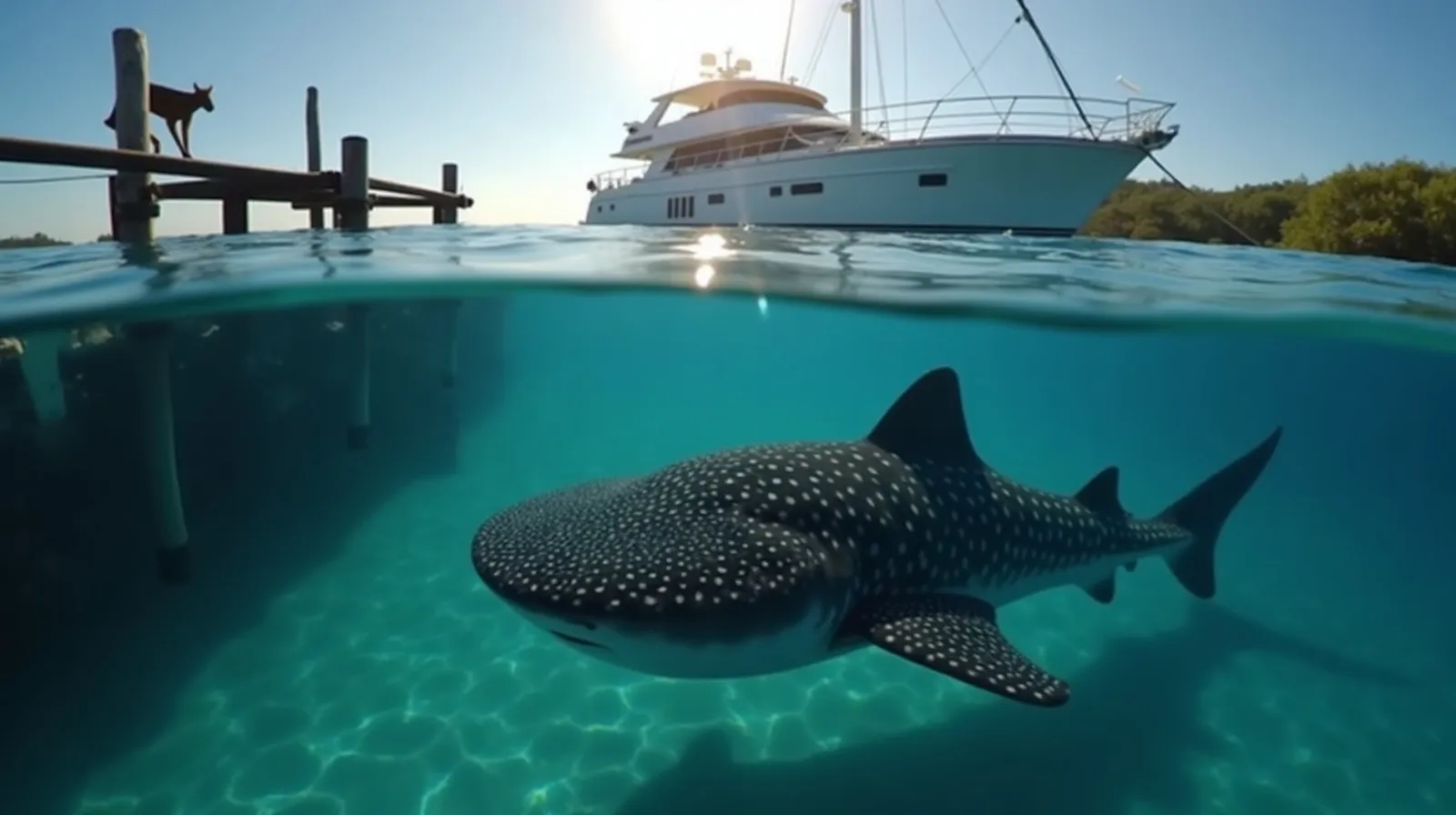
Cenderawasih Bay is Indonesia’s largest marine park and its most counter-seasonal: tucked under Papua’s Bird’s Head, it stays sailable through the July–September months that close much of the eastern archipelago, which is why expedition charters use it as the mid-year Papua option. The draw is singular — the world’s most dependable whale shark aggregation, resident year-round at the bagan platforms off Kwatisore — with WWII wrecks and endemic-rich reefs as supporting cast. It appears in the planner’s Papua frontier legs as the specialist’s choice.
The passage plan
| Leg | Distance | Notes |
|---|---|---|
| Manokwari → Purup / east coast | ~90 nm | Overnight passage, wreck diving at Manokwari first |
| Purup → Roon island | ~40 nm | Waterfall village, reef walls |
| Roon → Kwatisore (bagans) | ~35 nm | Whale shark encounters, park HQ check-in |
| Kwatisore → Nabire | ~30 nm | Disembark via Nabire airport |
The one-way Manokwari–Nabire shape is standard: both towns have airports, so the 200 nm bay is sailed once rather than doubled. Clearance and park permits are handled at Manokwari; the formality sequence follows the standard Indonesian port clearance pattern.
The Kwatisore aggregation
Cenderawasih’s whale sharks are resident, not migratory — the bagan platforms off Kwatisore feed them incidental baitfish year-round, and individual sharks have been re-identified at the same platforms across a decade. Encounters run at dawn on snorkel (park rules) and commonly involve three to six sharks at once, including 8-metre adults. The fishermen’s cooperative charges a per-visit fee that your crew arranges; it funds the villages that maintain the system.
Wrecks and endemics
The bay’s isolation — cut off from the Pacific’s currents for millennia — bred endemic reef fish found nowhere else, and its WWII history left diveable wrecks at Manokwari, including the 120-metre Shinwa Maru. Reefs are healthiest along Roon and the eastern shore. Visibility is honest rather than spectacular (15–25 m); the bay is a wildlife destination first, a reef gallery second — the reverse of Triton Bay’s balance.
Season, vessel and cost note
July–September is the strategic window (calm inside the bay while trades blow elsewhere), though the bay itself works most of the year. Distances demand expedition vessels with long legs: 10–14 day charters, USD 4,000–16,000 per day whole-boat, heavy fuel APA for the 200 nm bay plus repositioning from Sorong. Pair it with the Bird’s Head’s north coast, or fly guests in for the bay alone and let the vessel reposition empty.
Beyond the bagans: what fills the other days
The whale sharks headline, but a Cenderawasih itinerary earns its length with the supporting programme. Manokwari opens with wreck diving — the Shinwa Maru’s holds and the harbour’s scattered WWII debris field — plus the provisioning morning at Papua’s most orderly market. The east-coast passage south calls at Purup and the Auri islets, where the bay’s isolation-bred endemics (the Cenderawasih fusilier and walking shark among them) fill reefs that mainstream Indonesian diving has never named. Roon island pairs a waterfall that drops nearly into the sea with a stilt village whose church choir practice, drifting over the anchorage at dusk, becomes every guest’s unexpected memory. The final days at Kwatisore alternate bagan mornings with reef afternoons, and Nabire’s airport closes the line without backtracking.
The bay’s scale deserves respect: 200 nm end to end with no marine support between the two towns, which is why the route belongs to vessels that carry their own redundancy — twin generators, watermakers, full medical kits and crews who treat self-sufficiency as the baseline rather than the exception.
Practical notes for Cenderawasih
- Permits: national park entry plus the standard port clearances — operators file everything at Manokwari before departure.
- Encounter rules: snorkel-only at the bagans, dawn sessions, distance discipline; fees negotiated with platform crews are customary and fair.
- Season: July–September is the strategic window; the bay itself stays workable most months.
- Fuel: Manokwari and Nabire only, truck-to-wharf; load the full leg plus a weather reserve.
- Communications: cellular at the towns and patchy along the coast; satellite fills the middle days.
- Health margin: nearest advanced medical care is Manokwari or Nabire — evacuation cover and conservative diving are non-negotiable.
- Photography: the bagan encounters are wide-angle heaven in the first hour of light — brief camera guests the night before.
Cenderawasih rewards commitment the way only far places do: the world’s most reliable giants, reefs with no names, and a bay that most of yachting still cannot place on a chart.
One closing note on pacing: Cenderawasih rewards patience more than mileage. Crews that anchor two full days at Kwatisore — rather than ticking the encounter and steaming on — see the bagan mornings at their unhurried best, catch the afternoon reef sessions nobody schedules, and give the bay’s scale time to register. On a route this far from anywhere, the days you do not move are usually the ones the party remembers longest, and the itineraries that build them in are the ones worth signing.
Quick answers
Why are Cenderawasih Bay’s whale sharks so reliable?
They are resident rather than migratory: bagan fishing platforms off Kwatisore provide incidental food year-round, and the same individuals return daily. Dawn snorkel encounters with several sharks at once are the norm.
When should a charter visit Cenderawasih Bay?
July–September is the classic window — the bay stays calm while southeast trades close much of eastern Indonesia. The whale sharks themselves are present in all months.
How long does a Cenderawasih charter take?
Ten to fourteen days for the one-way Manokwari–Nabire route, covering wrecks, Roon island and the Kwatisore bagans. Both endpoints have airports, so the 200 nm bay is sailed only once.
Related briefs
Continue with Halmahera Loop and Sheltered Waters, Slow Days.
Want this route priced for your dates? Message the Indonesia Yacht Charter desk on WhatsApp +62 811-3941-4563 or email [email protected] for routes, vessels and honest USD quotes within 48 hours.
Chart your Indonesian passage
Tell us your dates, group and the water you want under the keel. The desk replies on WhatsApp with routes, vessels and an honest USD quote.