
Routes & Itineraries
Provisioning Stops Across the Archipelago: A Route Planner’s Map
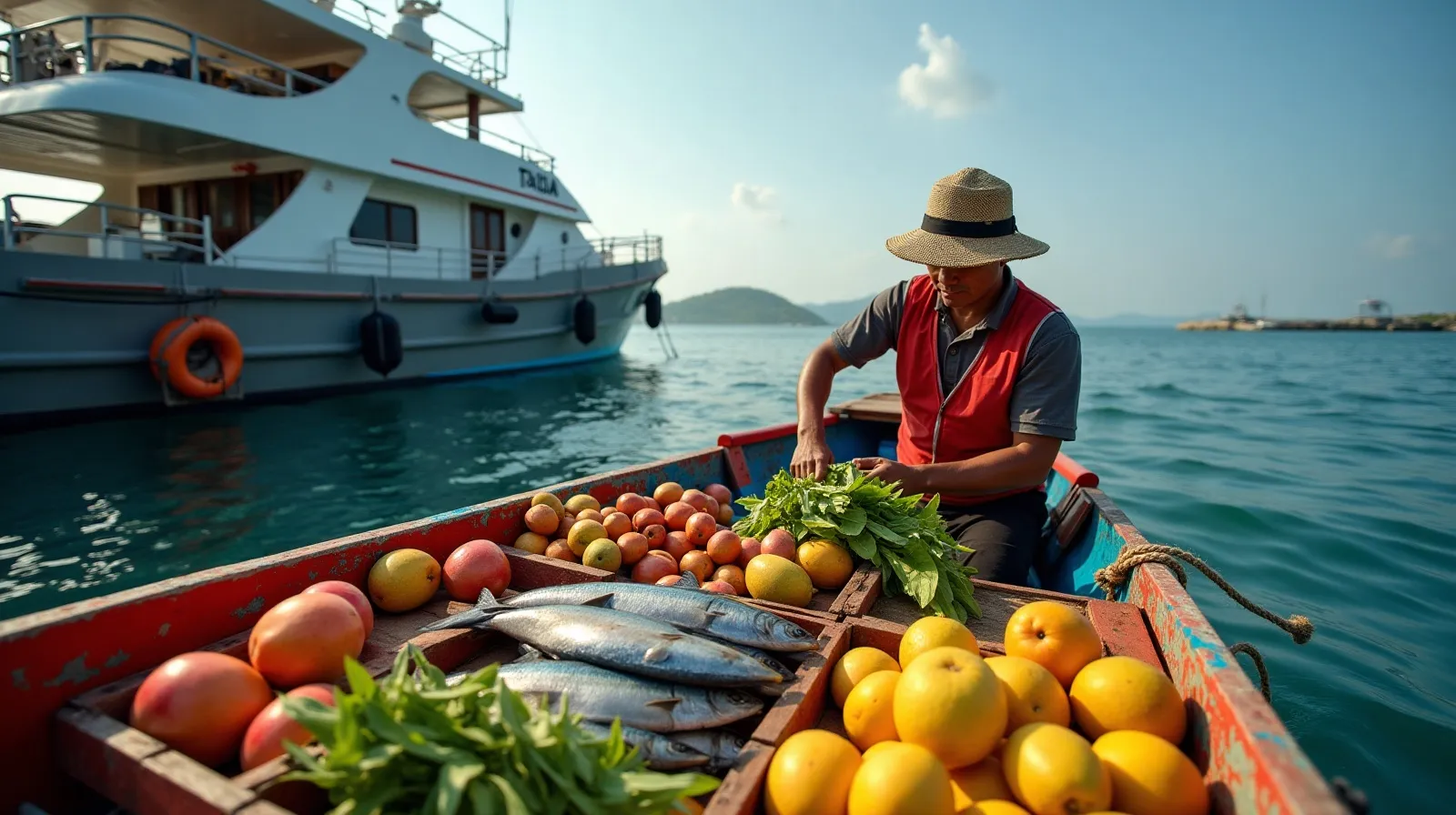
Indonesian routes are planned around six real provisioning hubs — Bali, Labuan Bajo, Makassar, Ambon, Sorong and Ternate — and everything between them is market-day opportunism. Understanding that map explains half the route decisions in the charter route planner: why itineraries stage where they do, why APAs scale with remoteness, and why good crews treat a village market as both pantry and cultural programme.
The six hubs, ranked
| Hub | Grade | What it supplies |
|---|---|---|
| Bali (Benoa) | Full | Everything: imported goods, wine, specialty diets, spares |
| Labuan Bajo | Good | Fresh produce, fish, growing imported range |
| Makassar | Good | Big-city markets, fuel, hardware, cold chain |
| Ambon | Fair | Produce, fish, staples; limited imports |
| Sorong | Fair | Papua gateway: staples, fuel, some cold chain |
| Ternate | Fair | North Maluku staples, spice-market produce |
Between hubs: market-day tactics
Off the hub map, crews provision the way the islands feed themselves: dawn fish markets on the beach (Kalabahi, Waikelo, Wakai), twice-weekly produce markets in district towns, and direct trade at anchor — outrigger canoes selling lobster, bananas and drinking coconuts alongside. The rules of thumb: buy fish at first light or from the boats directly, buy produce the day it arrives, and let the chef negotiate — village prices are honest but crew-to-seller pricing is better than guest-to-seller. It is also the best cultural access a charter gets, run with the same courtesy set out in the village protocol hub.
What runs out first
The failure list is predictable: dairy and cheese (no cold chain east of Makassar), leafy salads (three days’ life in tropical lockers), bread (crews bake aboard past Labuan Bajo), quality coffee beans (ironically, in the country that grows them — buy in Bali), and imported alcohol, which is hub-only and heavily taxed. Serious galleys respond with 14-day menu plans, vacuum sealing, sprouting jars and a freezer manifest — the craft that separates expedition chefs from resort chefs.
What this means for your route and budget
Provisioning geography sets APA reality: a Bali–Komodo week resupplies mid-route and runs a lighter allowance, while a Halmahera loop guide or Banda crossing loads two weeks of everything at the last hub and prices accordingly. It also sets menu expectations — the further east, the more the menu becomes what the sea and the market offer that morning, which seasoned guests come to prefer. The full budgeting picture, APA mechanics included, lives on the Indonesia charter cost guide.
How the galley plans a fortnight: the expedition method
Watching a serious charter chef plan an eastern leg is watching logistics as craft. The method starts from the menu backwards: fourteen dinners sketched against the route, each tagged by its supply source — hub stores, village market, or the sea itself. Proteins are layered by shelf life: fresh fish eaten as caught or bought, vacuum-sealed hub meats through the first week, frozen reserves after. Produce runs the same gradient — leafy greens in the first days, hard vegetables and cabbage-family stalwarts through the middle, sprouting jars and preserved goods at the far end. Bread becomes a daily bake by day four; yoghurt and kombucha cultures ride the whole trip; and the freezer manifest is a literal document, taped inside the lid, amended daily. The APA’s provisioning line funds all of it transparently — receipts from the Benoa importer to the Kalabahi fish market end up in the same reconciliation file.
Guests can help the system twice: once before departure, by filling the preference sheet honestly (the difference between a stocked galley and a guessed one), and once mid-route, by treating market mornings as the excursions they genuinely are — the chef’s negotiation for tuna at first light is better theatre than most shore programmes.
Practical notes on provisioning by region
- Bali: everything, including specialty diets, wine and imported cheese — the only true full-service load in the country.
- Labuan Bajo: strong produce and fish, growing imports; the standard Komodo top-up between Bali loads.
- Makassar and Ambon: big-market staples and excellent fish; treat imports as unavailable.
- Sorong and Ternate: staples, produce, spice-market bonuses; cold chain thin — freeze at the previous hub.
- Village economies: fish, coconuts, bananas, papaya, eggs — bought at fair prices, they fund goodwill along the whole route.
- Water: watermakers rule east of Komodo; bottled supply is a hub commodity only.
The map’s lesson generalises: on remote routes the galley is infrastructure, and the difference between a good expedition and a great one is usually planned at a market stall, days before the guests taste why.
Quick answers
Where do charter yachts provision in Indonesia?
Six real hubs: Bali, Labuan Bajo, Makassar, Ambon, Sorong and Ternate. Between them, crews use village fish markets at dawn, district market days and direct trade with canoes at anchor.
What food runs out first on an Indonesian charter?
Dairy, salad greens, bread and imported goods — the cold chain thins east of Makassar. Expedition galleys plan 14-day menus, bake aboard and vacuum-seal to bridge the gaps.
Does provisioning affect charter cost?
Directly — it is a core APA component. Routes that resupply mid-week run lighter allowances than expedition legs that load two weeks of stores at the final hub.
Related briefs
Continue with Sailing East vs West Monsoon and Where Expedition Yachts Refill Beyond Bali.
Take the next step with a working desk. Message the Indonesia Yacht Charter desk on WhatsApp +62 811-3941-4563 or email [email protected] for routes, vessels and honest USD quotes within 48 hours.

Chart your Indonesian passage
Tell us your dates, group and the water you want under the keel. The desk replies on WhatsApp with routes, vessels and an honest USD quote.