Planning & Legal
Flag State and Cabotage Rules in Indonesian Waters
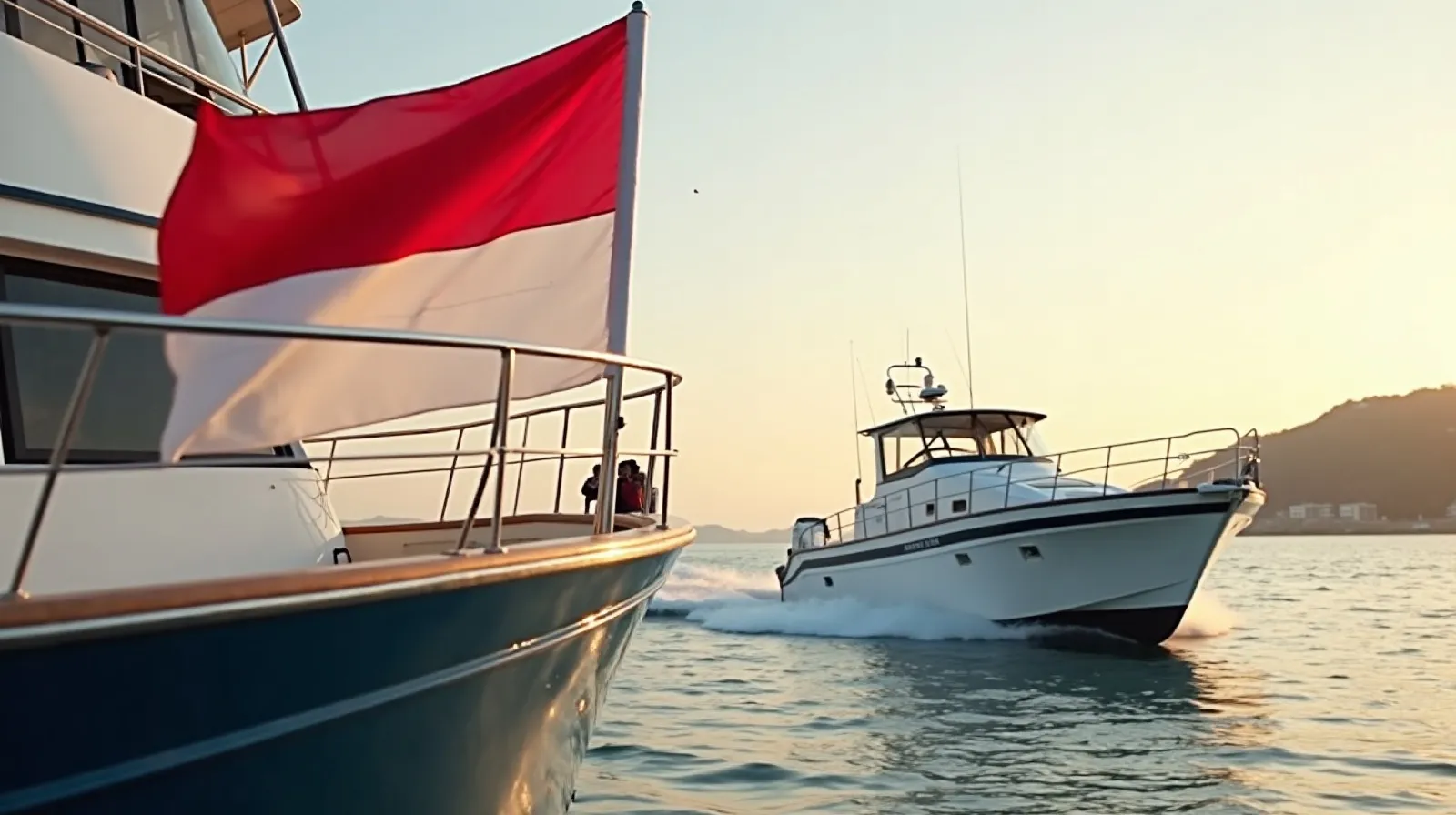
Cabotage — the reservation of domestic maritime commerce for domestically flagged vessels — is the legal keel under Indonesia’s entire charter industry. It explains why the fleet is Indonesian-flagged, why foreign superyachts cannot simply sell Komodo weeks, and why booking a licensed local vessel is not just the practical choice but the legally clean one. Ten minutes here saves confusion everywhere else in the legal requirements picture.
The principle, plainly
Indonesian law reserves the carriage of passengers and goods between Indonesian ports for Indonesian-flagged vessels crewed under Indonesian certification. It is asas cabotage, a pillar of national shipping policy since 2005 — and far from unique: the US (Jones Act), the EU internally, and most maritime nations run versions of the same principle. In an archipelagic state where shipping is sovereignty, the policy is existential, and enforcement is real: port clearances, manifests and patrols all key off the vessel’s flag and licences.
What it means in practice
| Actor | Can | Cannot |
|---|---|---|
| Indonesian-flagged licensed charter vessel | Charter freely between all Indonesian ports | — |
| Foreign-flagged private yacht | Cruise privately on visiting-yacht terms | Sell charters between Indonesian ports |
| Foreign-flagged superyacht (commercial) | Operate under narrow event/exemption permits | Run domestic charter seasons |
| Charter guest | Book any licensed Indonesian vessel worry-free | Inherit any flag risk — it binds operators, not guests |
The foreign-flag workarounds, honestly assessed
The exceptions are narrow by design. Event permits cover specific, time-boxed commercial activities. Some foreign vessels position guests offshore or structure voyages as international legs — paperwork-heavy constructions at the edge of the rules. And a grey market of quietly chartering foreign boats exists at the margins, carrying the real risk: a vessel operating outside its permitted use is a vessel whose insurance can decline the claim, which is the one scenario a guest should never buy into. The clean path is simply the licensed local fleet — which, conveniently, includes the best boats in these waters anyway.
Why licensed local operators are the answer
Cabotage’s practical gift to guests is clarity: an Indonesian-flagged, licensed vessel with certified crew is compliant by construction — insurance valid, port clearances routine, park access smooth, per the process in the clearance guide. The licensed fleet spans every tier from day catamarans to flagship phinisi on every route in the route planner notes. For owners, the same principle points to the structures in the ownership guide: flag locally (directly or via licensed operators) if charter revenue is the goal. The rule that looks like a restriction is, in practice, the market’s quality floor.
How the rule shaped the fleet you charter
Cabotage’s most interesting effect is industrial: it built the modern Indonesian charter fleet. When the principle hardened in the late 2000s, demand for domestic charter capacity could no longer be met by foreign hulls — and the capital flowed instead into the archipelago’s own shipbuilding tradition. The phinisi renaissance of the last fifteen years — Bulukumba yards launching charter conversions of ever-rising ambition, naval architects marrying ironwood hulls to modern systems — is cabotage’s direct product: a protected market that made world-class local vessels economic to build. The same dynamic professionalised crewing (Indonesian certification pathways now staff the entire fleet) and operations. The counterfactual is visible in markets without such rules, where local maritime traditions compete against imported tonnage and mostly lose. Whatever one thinks of protectionism in the abstract, the traveller’s practical result here is singular: the world’s only charter market whose signature vessel is built, crewed and sailed by the culture that invented it.
For guests, the rule’s remaining edge cases are worth a sentence each. International arrivals: a charter beginning in Singapore and ending in Indonesia is an international voyage with its own clearing logic — operators structure these correctly. Superyacht events: regattas and rallies run under specific permits. And the future: periodic policy discussion about liberalising niches continues; the licensed local fleet remains the clean answer under every scenario discussed.
Practical notes on the flag layer
- Booking test: Indonesian flag plus named operating licence equals compliant — one question, one answer.
- Foreign owners: the PT PMA and operator-agreement structures exist precisely to bring hulls inside the rule.
- Insurance nexus: permitted use underwrites the policy — the rule and your claim are connected.
- Event charters: international-leg structures are legitimate but specialist — use desks that run them routinely.
- Crew nationality: Indonesian certification requirements are part of the same framework and part of the fleet’s quality.
- No guest exposure: the rule binds vessels and operators; passengers on licensed boats carry zero flag risk.
Cabotage, read correctly, is the Indonesian charter market’s founding document — the rule that made the fleet local, the crews professional and the guest’s choice simple.
Quick answers
What is cabotage in Indonesian waters?
The legal reservation of passenger and goods carriage between Indonesian ports for Indonesian-flagged, Indonesian-crewed vessels — the foundation of national shipping policy since 2005.
Can a foreign-flagged yacht charter in Indonesia?
Not domestically — foreign flags may cruise privately on visiting terms, with only narrow event-permit exceptions for commercial use. Domestic charter belongs to the licensed Indonesian-flagged fleet.
Does cabotage create any risk for charter guests?
Only if booking outside the licensed fleet: an illegally chartering foreign vessel risks voided insurance. Guests on licensed Indonesian vessels inherit no flag risk at all.
Related briefs
Continue with Clearance Procedures for Sailing Indonesia and Flags, Taxes and Charter-Out Basics.
Ready to turn this into a real itinerary? Message the Indonesia Yacht Charter desk on WhatsApp +62 811-3941-4563 or email [email protected] for routes, vessels and honest USD quotes within 48 hours.
Chart your Indonesian passage
Tell us your dates, group and the water you want under the keel. The desk replies on WhatsApp with routes, vessels and an honest USD quote.