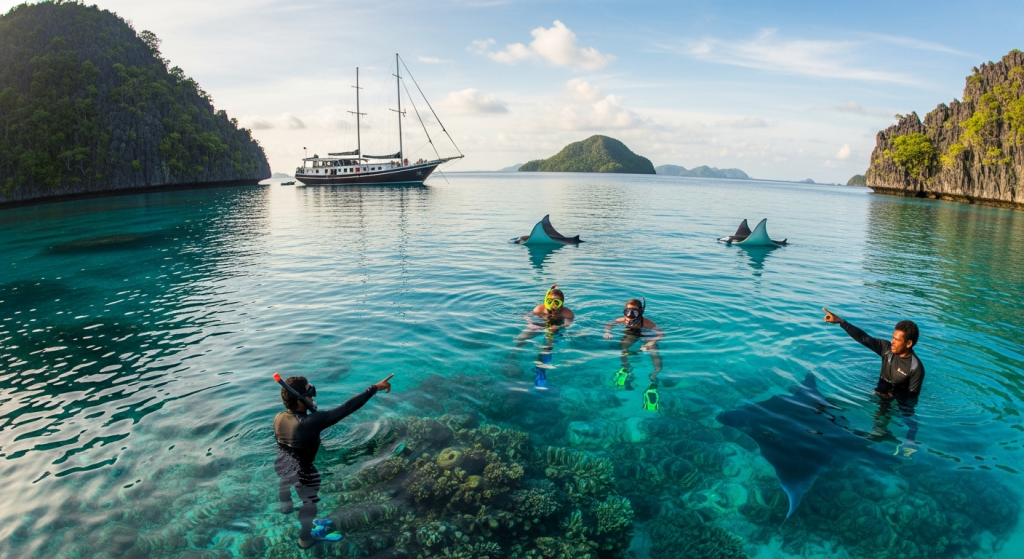
The equatorial sun warms the deck, a gentle breeze carries the scent of clove and salt. Indonesia reveals its vast maritime secrets not on a fixed calendar, but through a nuanced understanding of its seasonal rhythms.
The Dual Seasons: Understanding Indonesia’s Monsoon Cycle
Indonesia, a sprawling archipelago of over 17,500 islands, operates under two primary monsoon systems: the West Monsoon (November to April) and the East Monsoon (May to October). The West Monsoon brings the ‘wet season,’ characterized by higher rainfall and stronger winds from the northwest, particularly affecting western regions like Bali and parts of Sumatra. Conversely, the East Monsoon ushers in the ‘dry season,’ with southeast winds bringing less precipitation and generally clearer skies across much of the country. This fundamental meteorological pattern dictates the optimal windows for an indonesia yacht charter across its diverse regions. For instance, average annual rainfall in Jakarta reaches approximately 1,800 mm, while eastern Nusa Tenggara often experiences less than 1,000 mm. Temperatures across the archipelago remain remarkably consistent, typically ranging from 26°C to 30°C year-round. Understanding these macro-climates is the first step in planning a successful luxury yacht itinerary, ensuring calm waters and prime conditions for exploration. The transition periods between these monsoons, often called ‘shoulder seasons,’ can also offer unique advantages for specific routes, providing a balance of favorable weather and fewer fellow travelers. The local knowledge of an experienced captain, often with decades navigating these waters, proves invaluable. The Indonesian Meteorology, Climatology, and Geophysical Agency (BMKG) provides detailed forecasts crucial for real-time route adjustments.
Komodo National Park: The Dry Season’s Apex
For those seeking the iconic Komodo dragon and vibrant coral reefs, Komodo National Park presents its finest face during the dry season, spanning from April to October. This period promises consistently calm seas, brilliant sunshine, and exceptional underwater visibility, often exceeding 25 meters. The park, a UNESCO World Heritage site since 1991, encompasses a marine area of 1,733 square kilometers, including major islands like Komodo, Rinca, and Padar. During these months, the southeast winds are mild, creating ideal conditions for sailing a luxury phinisi or motor yacht amongst the volcanic islands. Dive sites such as Manta Point become highly productive, with giant manta rays (Mobula birostris) frequenting the nutrient-rich currents. On land, the Komodo dragons (Varanus komodoensis), numbering over 3,000 individuals across the park, are more active, making guided treks on Rinca and Komodo islands particularly rewarding. Water temperatures consistently hover around 27-29°C, perfect for extended snorkeling and diving excursions. Peak season, from July to August, sees the most visitors, yet the vastness of the park allows for secluded anchorages. Consider a 7-day minimum itinerary to fully appreciate the park’s biodiversity and unique landscapes. The local currents in Komodo can be strong, demanding experienced dive guides and captains, a standard for any reputable indonesia yacht charter operation. For more on the park’s ecological significance, consult the UNESCO World Heritage Centre.
Raja Ampat: The Equatorial Sweet Spot
Shifting to the eastern reaches of the archipelago, Raja Ampat in West Papua reveals its exceptional marine biodiversity during a counter-cyclical season. The prime time for an indonesia yacht charter here runs from October to April, coinciding with the West Monsoon’s calmer influence on this equatorial region. During these months, the seas are placid, skies are clear, and the underwater world is at its most spectacular. Raja Ampat sits within the Coral Triangle, a marine biodiversity hotspot, boasting over 75% of the world’s known coral species—a staggering figure, often cited as over 600 distinct types. The region’s 46,000 square kilometers of protected waters host more than 1,700 fish species, including pygmy seahorses, wobbegong sharks, and barracudas. Misool, with its dramatic limestone karsts and vibrant soft corals, is particularly renowned during this window. Visibility frequently extends beyond 30 meters, making it a photographer’s dream. The average water temperature remains a balmy 28-30°C. While the peak season is December to February, the shoulder months of October-November and March-April offer excellent conditions with fewer yachts. A 10-day to 14-day itinerary is recommended to explore the diverse areas from Waigeo to Misool without rushing. Access typically involves flights to Sorong (SOQ), a major hub for luxury yacht transfers. Learn more about its ecological importance on Wikipedia’s Raja Ampat Islands page.
The Banda Sea & Spice Islands: Passage and Heritage
For those drawn to history, pelagic encounters, and trans-archipelago voyages, the Banda Sea and its legendary Spice Islands offer specific, often shorter, windows for an indonesia yacht charter. These remote islands, including Banda Neira, Run, and Ai, are best visited during the transition seasons: April-May and September-November. During these months, the monsoons are shifting, resulting in calmer waters ideal for traversing the open Banda Sea, a deep basin known for its nutrient-rich upwellings. This makes it a prime location for encounters with large pelagic species, including scalloped hammerhead sharks (Sphyrna lewini) and various whale species, particularly around the volcanic seamounts. Historically, the Banda Islands were the world’s sole source of nutmeg and mace, sparking intense colonial rivalry. The Dutch East India Company (VOC) established a monopoly here in 1621, leaving behind fortifications like Fort Belgica on Banda Neira, a testament to its pivotal role in global trade. A typical yacht itinerary might span 7-10 days, combining diving with cultural and historical exploration. The passage between Ambon and the Banda Islands is approximately 130 nautical miles, requiring stable sea conditions. These ‘passage seasons’ offer a unique blend of adventure and cultural immersion, appealing to those who seek more than just beach relaxation. The relatively short duration of these optimal windows means planning well in advance is crucial for securing a luxury vessel.
Bali, Sulawesi, and Triton Bay: Niche Windows and Dynamic Cruising
Beyond the major charter destinations, other Indonesian regions offer distinct, though sometimes overlapping, optimal periods for an indonesia yacht charter. Bali, for instance, is generally accessible year-round, but its dry season (April to October) provides the most consistently sunny weather and calmest seas, ideal for exploring Nusa Penida and Lombok. Water visibility around Bali averages 15-25 meters during this period. Sulawesi, particularly its marine parks like Wakatobi and the Togean Islands, aligns more closely with Komodo’s dry season, with the best conditions typically from April to November. Wakatobi National Park, covering 13,900 square kilometers, is renowned for its pristine reefs and diverse coral formations, making it a top diving destination. Triton Bay, located in West Papua’s Kaimana Regency and often considered part of the “Forgotten Islands” or “Bird’s Head Seascape” alongside Raja Ampat, follows a similar cycle to Raja Ampat. Its peak season runs from October to April, offering phenomenal soft coral gardens and endemic species like the walking shark (Hemiscyllium galei). The logistical complexity of reaching these more remote areas often mandates a multi-week itinerary, typically 14-21 days, and specialized knowledge from your charter broker. These destinations are often chosen by repeat guests or those with specific interests, such as marine biology research expeditions or deep-sea photography.
Navigating the Shoulder Seasons: The Insider Advantage
While peak seasons offer predictable perfection, the shoulder seasons – typically March-April and October-November – present an insider’s opportunity for a more exclusive indonesia yacht charter. These transition periods, bridging the distinct monsoons, often deliver a blend of favorable weather, fewer crowds, and sometimes, more competitive charter rates. A luxury phinisi, measuring 40-50 meters in length, typically commands a daily rate upwards of $15,000, and these shoulder months can occasionally offer slight flexibility. For instance, early April might see the tail end of Raja Ampat’s calmest period, allowing for an extraordinary crossing towards the Banda Sea as conditions improve. Similarly, late October can offer excellent diving in Komodo before the full onset of the West Monsoon, combined with the beginning of the optimal window for Raja Ampat. The key to successful shoulder season cruising lies in the expertise of your captain and crew, who possess intimate knowledge of local microclimates and currents. They can adapt itineraries on the fly, seeking sheltered anchorages and maximizing opportunities for optimal conditions. This approach is particularly appealing to seasoned travelers seeking authenticity and tranquility away from the busiest times. It requires a flexible mindset but rewards with exceptional privacy and often unique wildlife encounters as marine ecosystems transition.
Planning an indonesia yacht charter requires more than just picking a date; it demands a deep understanding of the archipelago’s intricate meteorological dance. Our team provides the insider knowledge and logistical finesse to align your luxury yacht experience with the finest conditions, whether you seek Komodo’s dragons, Raja Ampat’s corals, or the Banda Sea’s historical allure. Connect with us to craft your bespoke itinerary, perfectly timed for an exceptional journey across Indonesia’s magnificent waters.