
Routes & Itineraries
Ambon to Banda: The Classic Nutmeg Run, Day by Day
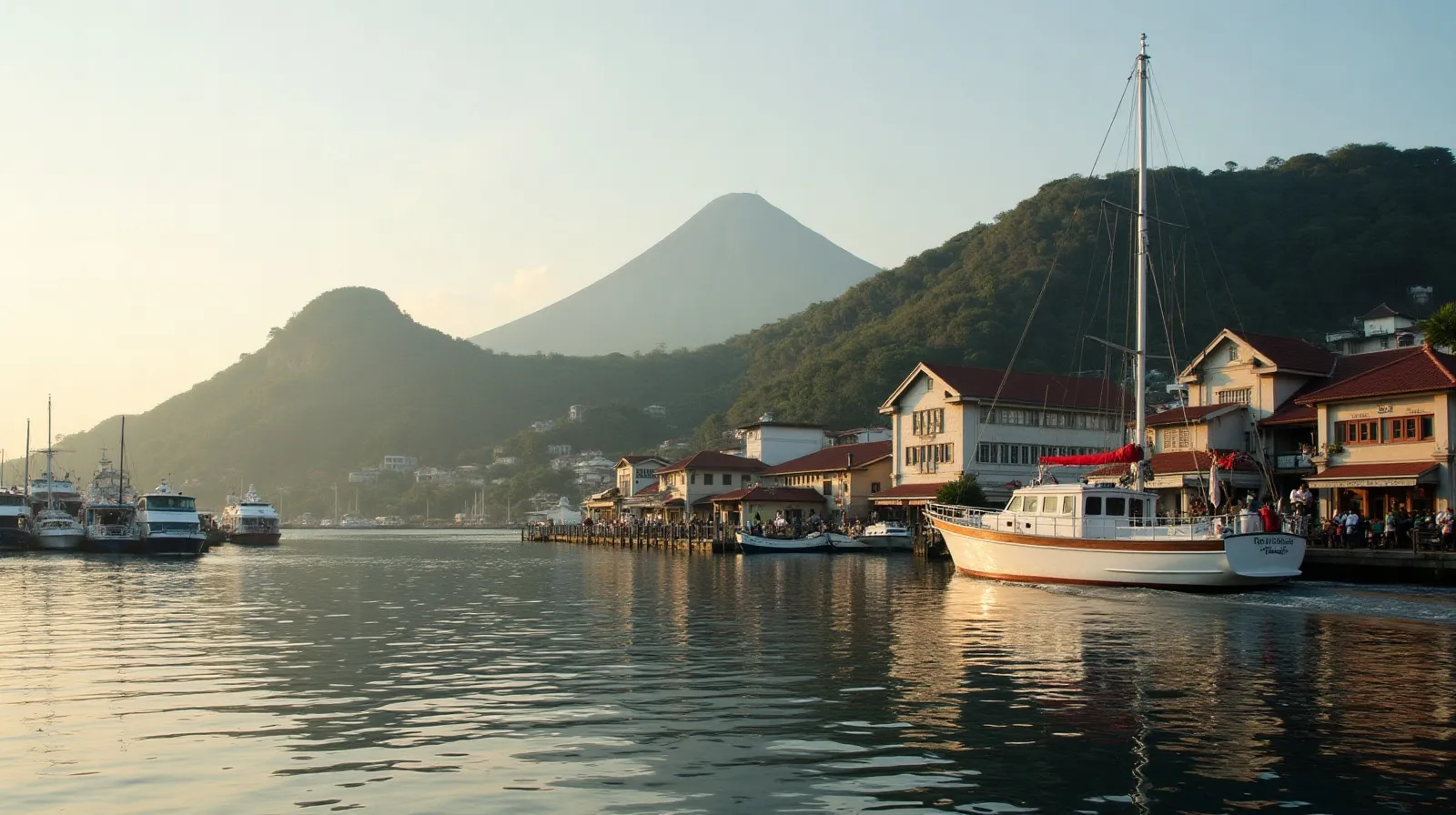
Ambon to Banda Neira is the classic short expedition in eastern Indonesia: one 110 nm overnight passage from Maluku’s provincial capital to the nutmeg islands that once anchored the world economy. Five to seven days covers the run and the Banda group properly, making it the most achievable Banda Sea itinerary in the planner’s expedition list — the full crossing’s reward without the full crossing’s commitment.
Day by day
| Day | Plan |
|---|---|
| 1 | Board Ambon, clear port, afternoon at Pintu Kota arches; depart 2000 for the overnight run |
| 2 | Dawn landfall under Gunung Api; anchor Banda Neira roadstead; Fort Belgica and nutmeg groves |
| 3 | Gunung Api lava-flow snorkel; Banda Besar plantation walk; night market on Neira |
| 4 | Hatta island — walls and sea-fans; anchor off its sandspit |
| 5 | Run island (traded for Manhattan in 1667); Ai island reefs |
| 6–7 | Return overnight to Ambon, or continue the greater crossing south |
The passage itself
The run leaves Ambon’s sheltered bay in the evening and takes the open Banda Sea on the beam — in season, ten hours of long low swell under serious stars, with Gunung Api’s cone rising off the bow at first light. It is many guests’ first true offshore night passage, and the gentlest introduction Indonesia offers; the watch-keeping and timing logic follows the same pattern as the Flores Sea crossing playbook.
History underfoot
Banda compresses more history per square mile than anywhere in the archipelago: Fort Belgica’s pentagon above the anchorage, the governor’s house with its poisoned-well legends, plantation rows of nutmeg under kenari shade on Banda Besar, and Run — the islet the Dutch swapped Manhattan for. Walking it from a yacht anchored in the roadstead where the spice fleets moored is the point of the route. Lava-flow coral at Gunung Api’s 1988 eruption site — table corals racing over new rock — is the marine signature.
Season, vessel and cost note
Sail it in the Banda windows: late September–early December or March–April, when the overnight run is a beam-sea cruise rather than a slog. Phinisi and expedition motor yachts fit best; a well-found 25-metre phinisi at USD 3,500–8,000 per day is the market’s centre for this route, with APA covering Ambon provisioning and park-style landing fees. The route extends naturally: south through the volcanic chain per the Banda Sea crossing brief, or a layover pairing with Ambon Bay’s famous muck diving before departure.
Ambon itself: the overlooked bookend
Most itineraries treat Ambon as an airport with a harbour; the nutmeg run works better when it treats the city as its opening chapter. Ambon Bay’s inner shores hold some of the world’s most celebrated muck diving — Laha’s jetties and slopes produce rhinopias, mimic octopus and frogfish with a reliability that has made “Ambon critters” a genre — and a layover day before the crossing lets divers open their logbooks properly while the crew completes clearance and provisioning. Ashore, the city’s history frames everything the Bandas will show: the VOC’s Fort Victoria, the martyrdom of Pattimura, and a market whose spice tables still run on the trade the islands invented. Departure evening, with the bay’s lights falling astern and the open Banda Sea ahead, lands differently when the history has been walked first.
The passage rewards preparation of the gentler kind too: cabins secured, seasickness protocols run before dinner rather than after, and guests briefed on the watch rhythm so the 0300 sail change is theatre rather than alarm. By the second crossing — the run home — most guests have joined a watch by choice.
Practical notes for the nutmeg run
- Windows: late September–early December and March–April; outside them the beam swell makes the overnight honest work.
- Clearance: Ambon’s syahbandar and agents handle the leg’s paperwork; Banda Neira’s harbour office processes arrival in minutes.
- Fuel and water: full load at Ambon; Banda offers drum diesel in modest quantity and good market produce.
- Anchorage: Neira roadstead on sand, 15–25 m, with volcano williwaws in unsettled spells — set the bridle properly.
- Ashore: nutmeg plantation walks on Banda Besar, Fort Belgica at golden hour, and the town’s Chinese-Dutch streetscape on foot.
- Diving: Hatta’s walls and the lava-flow gardens are the two protected slots; currents are gentler than the crossing’s reputation suggests.
As a first expedition or a honeymoon with substance, the run remains unbeaten: one real passage, four centuries of consequence, and anchorages that smell faintly of nutmeg when the land breeze comes off the groves.
Last word for the historically minded: bring a book on the spice wars and read it aboard — Giles Milton’s account is the crews’ habitual recommendation — because the run’s magic compounds when the anchorages have names you have just read in context. Few voyages anywhere let you sail an economic history this consequential at this scale; none let you do it with nutmeg still drying in the villages you anchor off.
Quick answers
How long is the passage from Ambon to Banda?
About 110 nm — a single overnight run of ten to twelve hours. Charters depart Ambon in the evening and make landfall under Gunung Api at dawn.
What is worth seeing in the Banda Islands?
Fort Belgica and the nutmeg plantations on Neira and Banda Besar, Gunung Api’s lava-flow coral gardens, Hatta’s walls, and Run — the island exchanged for Manhattan in 1667.
When should you sail the Ambon–Banda route?
Late September to early December or March–April, when the Banda Sea lies down. Outside those windows the overnight passage takes monsoon swell on the beam.
Related briefs
Continue with Crossing the Flores Sea and A Route Planner’s Map.
Want this route priced for your dates? Message the Indonesia Yacht Charter desk on WhatsApp +62 811-3941-4563 or email [email protected] for routes, vessels and honest USD quotes within 48 hours.
Chart your Indonesian passage
Tell us your dates, group and the water you want under the keel. The desk replies on WhatsApp with routes, vessels and an honest USD quote.