Boat Types
Phinisi Cruise vs. Private Yacht Charter in Indonesia: Which Is Better?
- Phinisi: Best for authentic ambiance, spacious open decks, and cultural immersion.
- Modern Yacht: Ideal for speed, advanced water toys, and reaching remote, disparate locations quickly.
- The Deciding Factor: Your preference for historical soul versus technological sophistication will shape your entire journey.
The water is a sheet of cobalt silk, disturbed only by the gentle wake of our tender. To the port side, the raw, prehistoric silhouette of Padar Island rises against a sky bleeding from apricot to indigo. To starboard, two vessels sit at anchor, representing the two souls of Indonesian maritime travel. One is a Phinisi, her two masts and intricate rigging a proud testament to a seafaring legacy stretching back centuries. The other, a sleek, white-hulled superyacht, hums with the quiet promise of modern power and precision. The air, thick with the scent of salt and clove, carries the central question for any discerning traveler planning an indonesia yacht charter: which vessel provides the superior platform for exploring these 17,508 islands? As an editor who has spent countless weeks navigating these waters, I can tell you the answer is not simple; it is a matter of soul, speed, and personal philosophy.
The Soul of the Archipelago: Understanding the Phinisi
To step aboard a Phinisi is to step into a living piece of history. These magnificent two-masted wooden ships are not mere replicas; they are the direct descendants of the vessels used by Bugis and Makassan sailors for centuries to ply the Spice Routes. The art of their construction, a craft passed down through generations by the Konjo people of South Sulawesi, was inscribed on UNESCO’s list of Intangible Cultural Heritage in 2017. Built by hand on a beach, without blueprints, using tropical hardwoods like ironwood and teak, their very essence is of the archipelago. I once spoke with Captain Iwan of the Rascal, who told me, “You don’t steer a Phinisi, you feel her. She speaks the language of the sea.” This sentiment captures the experience perfectly. While modern luxury Phinisis are equipped with powerful engines, their heart lies in the romance of sail. Under full canvas, with seven sails catching the monsoon winds, the experience is profoundly quiet and connected to the elements. The pace is deliberate, a cruising speed of 8-10 knots that encourages a deeper appreciation of the passing scenery. The onboard living space is also unique. Unlike modern yachts that prioritize individual cabin volume, the Phinisi philosophy emphasizes expansive, open-air communal decks. This design fosters a convivial atmosphere, perfect for multi-generational families or groups of friends who wish to connect over shared meals and sunset cocktails. The finest Phinisis, such as Dunia Baru or Prana by Atzaró, offer cabin suites of 30-50 square meters, but the true luxury is the acres of shaded deck space where the life of the charter unfolds.
The Modern Marvel: Defining the Private Superyacht Experience
Where the Phinisi offers soul, the modern superyacht offers surgical precision and power. A private yacht charter in Indonesia aboard a vessel from a builder like Feadship, Lürssen, or even a smaller, high-performance Pershing, is an entirely different proposition. The primary advantage is speed. A modern planning-hull yacht can cruise comfortably at 20-25 knots, more than double the speed of a Phinisi. This capability fundamentally changes the scope of a charter. An itinerary that might take a Phinisi 10 days to cover, a superyacht can accomplish in five, or it can connect disparate regions like the Komodo National Park with the remote Banda Islands, a distance of over 500 nautical miles, in a single charter. This is the ultimate tool for time-pressed explorers who want to see as much of Indonesia’s staggering diversity as possible. The onboard technology is another world entirely. Zero-speed stabilizers ensure a completely placid experience at anchor, eliminating the gentle roll you might feel on a traditional vessel. The crew-to-guest ratio often approaches 1.5-to-1, with specialized staff including mixologists, yoga instructors, and marine biologists. The water toy garage is a veritable adventure department, often housing not just jet skis and sea bobs, but perhaps a personal submarine or a fleet of electric-foil surfboards. Privacy is paramount, with soundproofed master suites that can occupy an entire deck, complete with private offices, gyms, and fold-out balconies that hover just above the water. This is a controlled, hermetically sealed bubble of perfection, allowing you to experience the wildness of Indonesia from a platform of absolute, uncompromising comfort.
Itinerary & Exploration: Flexibility vs. Tradition
The choice of vessel directly dictates the rhythm and range of your journey. A Phinisi charter is an exercise in immersion. The slower pace is perfectly suited to the concentrated archipelagos of Komodo or Raja Ampat. You might spend a day covering just 40 nautical miles, but in that short distance, you’ll snorkel with manta rays at Mawan, watch thousands of flying foxes depart from Kalong Island at dusk, and trek to a viewpoint for sunrise over Padar. The journey becomes a series of deep, unhurried dives into a specific region. The shallow draft of many Phinisis also allows them to access secluded bays and anchorages that larger, deep-keeled motor yachts cannot. According to the official guide from Indonesia’s Ministry of Tourism, there are over 29 islands within the Komodo National Park alone, and a Phinisi is the ideal tool for a granular exploration of them. Conversely, a modern superyacht offers the luxury of choice on a grand scale. The ability to cover 200 nautical miles overnight transforms the map. You could wake up in the volcanic landscapes of the Lesser Sunda Islands and be diving on the pristine reefs of the Alor Archipelago the next morning. This is particularly advantageous for charters longer than 10 days. A three-week charter on a fast motor yacht could conceivably start in Bali, cruise through Komodo, explore the Spice Islands, and conclude in the otherworldly karsts of Raja Ampat—a journey of over 1,500 nautical miles that would be impossible on a sailing vessel in the same timeframe. The decision, therefore, rests on your objective: do you wish to know one region intimately, or do you wish to sample the epic breadth of the entire Indonesian archipelago?
Onboard Experience: Ambiance, Crew, and Culture
The very fabric of your daily life at sea is woven differently on each type of vessel. Aboard a Phinisi, the crew is an integral part of the cultural experience. The captain and sailors are often from the very boat-building villages of Sulawesi, their knowledge of the winds, currents, and local folklore passed down through generations. Dinners are often communal affairs, served family-style on a vast outdoor dining table, featuring exquisite Indonesian-fusion cuisine prepared by a chef who sources ingredients from local island markets. The ambiance is relaxed, barefoot luxury—the feeling of a grand, floating beach house. The connection to the sea is constant; you live your life on deck, with the scent of teak and saltwater always present. Aboard a modern superyacht, the experience is one of flawless, discreet service. The international crew is trained to the highest standards of formal hospitality, anticipating your every need before you’re even aware of it. The environment is one of supreme privacy. You can choose to dine in a climate-controlled formal dining salon, have a private meal served on your suite’s balcony, or enjoy a curated beach barbecue set up by the crew with military precision. The chef, often Michelin-star trained, can procure virtually any ingredient from anywhere in the world, be it Japanese Wagyu or French truffles. The yacht itself is a destination, with onboard cinemas, spas, and beach clubs. It is less about cultural immersion with the crew and more about providing a flawless, five-star platform from which to engage with the destination on your own terms.
Cost & Value: A Detailed Financial Breakdown
When considering a private yacht charter in Indonesia, the financial investment is significant, and the value proposition differs greatly between a Phinisi and a modern superyacht. Luxury Phinisi charters typically operate on an “all-inclusive” model. A weekly rate, which can range from $40,000 for a high-quality 5-cabin vessel to over $180,000 for a palace like Phinisi Ocenau, will generally cover the yacht, crew, all meals and non-alcoholic beverages, and activities like diving, snorkeling, and shore excursions. This transparent pricing structure makes budgeting straightforward. The primary variables might be alcohol, national park fees (which can be around $150 per person per day in areas like Komodo), and crew gratuity (customarily 10-15% of the charter fee). For a comprehensive overview of these figures, our Indonesia Yacht Charter Pricing & Cost Guide offers a detailed analysis. Modern superyachts, in contrast, are almost always chartered under MYBA (The Worldwide Yachting Association) terms. This involves a base charter fee, which covers the yacht and crew only. On top of this, you pay an Advanced Provisioning Allowance (APA), typically 30-35% of the charter fee. This fund covers all variable expenses: fuel, food, beverages, port fees, communications, etc. A yacht with a base rate of $200,000 per week will require an APA of at least $60,000 upfront. While you are refunded any unused portion, the total cost is less predictable and almost always higher. The fuel consumption of a fast motor yacht covering long distances can be substantial, easily running into tens of thousands of dollars per week. The value is in the unmatched level of customization and the sheer capability of the vessel.
Quick FAQ: Your Charter Questions Answered
Are modern Phinisis safe and comfortable?
Absolutely. Today’s luxury Phinisis are built to stringent international maritime safety standards (like Bureau Veritas or RINA). They are equipped with modern navigation systems, safety equipment, and all the comforts of a luxury hotel, including powerful air-conditioning, en-suite bathrooms with hot water, and stable power generation.
What is the crew’s level of English proficiency?
On any reputable luxury charter, whether Phinisi or modern yacht, the senior crew (Captain, Cruise Director, Chief Stewardess) will be fluent in English. The entire crew is trained to communicate effectively with international guests, ensuring a seamless and comfortable experience.
Can I create a fully bespoke itinerary?
Yes, that is the core principle of a private charter. Whether you choose a Phinisi or a motor yacht, our team works with you and the yacht’s captain to craft a unique itinerary based on your interests, whether they are diving, culture, trekking, or pure relaxation. The only constraints are time, distance, and the prevailing weather conditions.
Which option is better for diving?
Both are exceptional platforms. Many Phinisis are purpose-built for diving, with dedicated dive masters and state-of-the-art compressor systems. Their ability to anchor in calm, shallow bays is a plus. Modern yachts can carry more specialized equipment and their tenders are often faster, allowing for quicker access to more distant dive sites within a single day.
Ultimately, the “better” vessel is the one that aligns with the narrative you wish to write for your Indonesian adventure. Do you see yourself as part of a grand maritime tradition, sails billowing as you glide between volcanic islands, connecting with the history and soul of the place? Or do you envision a journey of ultimate freedom and power, leveraging the best of modern technology to unlock the farthest, most exclusive corners of this vast nation? There is no wrong answer. The Indonesian archipelago is vast enough to accommodate both dreams. When you are ready to turn that dream into a detailed itinerary, our team is here to help you select the perfect vessel for your definitive indonesia yacht charter.
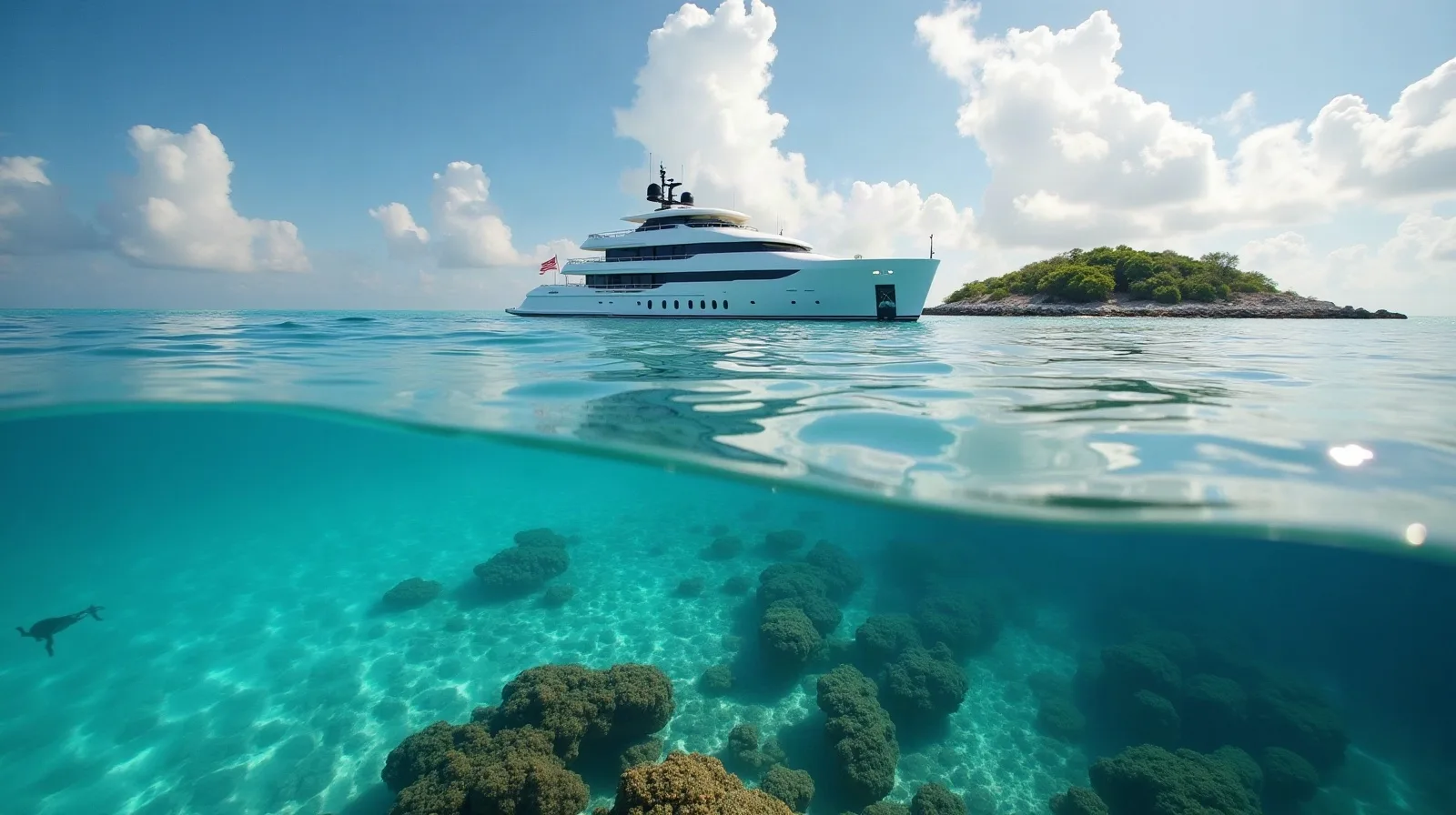
Chart your Indonesian passage
Tell us your dates, group and the water you want under the keel. The desk replies on WhatsApp with routes, vessels and an honest USD quote.