
Routes & Itineraries
Kei and Aru Islands: The Far Eastern Route Few Yachts Sail
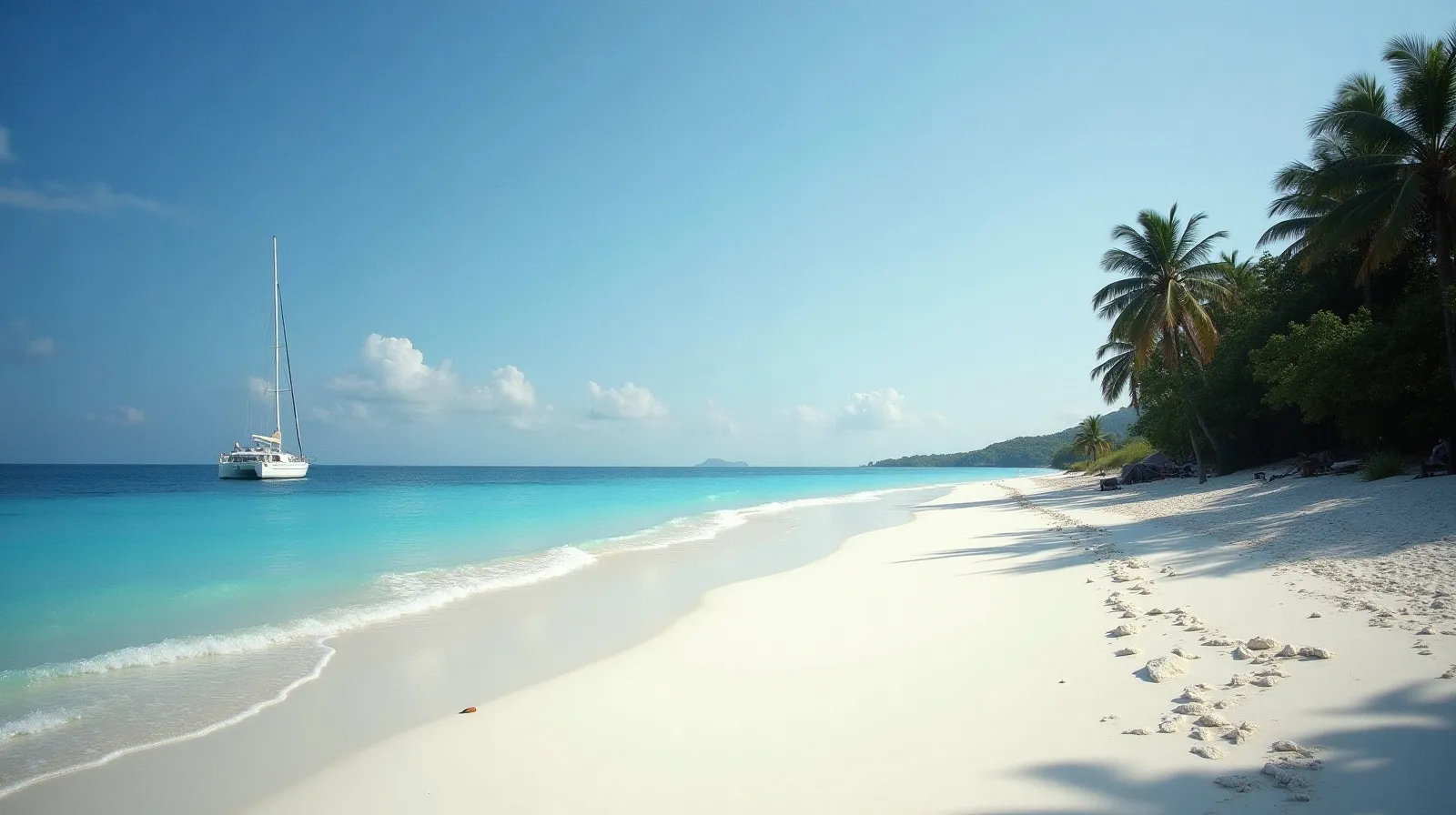
East of the Banda Sea, before Papua’s shelf begins, lie two archipelagos that even expedition itineraries usually skip: the Kei Islands, home to what may be Indonesia’s finest beach, and the Aru group, a lowland maze of channels where birds-of-paradise display above mangrove rivers. Together they form the far-eastern route in the planner’s frontier table — sailed by a handful of yachts a year, which is precisely the argument for it.
Route shape and logistics
| Leg | Distance | Notes |
|---|---|---|
| Banda → Kei (Tual) | ~160 nm | Overnight-plus; Tual has airport, market, drum fuel |
| Tual → Pasir Panjang | ~15 nm | Three kilometres of flour-white sand |
| Kei Kecil south coast | 20–30 nm | Cave springs, cliff shrines, empty coves |
| Kei → Aru (Dobo) | ~90 nm | Shallow-shelf crossing into the channel maze |
| Aru channels | 30–60 nm | Mangrove rivers, pearl farms, wildlife mornings |
Tual/Langgur is the logistics anchor — flights via Ambon, honest markets, fuel by drum. Dobo in Aru is smaller again; beyond it, the route is fully self-supported.
Kei: the beach and the limestone south
Pasir Panjang on Kei Kecil is the headline — three kilometres of sand so fine it squeaks, backed by casuarinas, with anchorage off its northern end and often not a single footprint by afternoon. The islands’ limestone south hides the counterpoint: freshwater cave pools (Hawang cave’s blue chamber), cliff shrines from the islands’ layered Catholic-adat culture, and coves that reward a slow tender day. Kei’s communities hold strong adat traditions; the visiting sequence in the village protocol brief is the operative manual.
Aru: channels and birds-of-paradise
Aru is unlike anywhere else on the route map: not volcanic, not karst, but a low continental fragment sliced by tidal channels that run inland like rivers. The prize is ornithological — greater birds-of-paradise displaying at dawn leks reached by tender and a short forest walk, arranged through villages that manage the trees. Pearl farms dot the sheltered channels; the wildlife-day rhythm resembles the bagan mornings of Triton Bay guide more than any reef itinerary. Tides run hard in the channels — this is tender-seamanship territory.
Season, vessel and cost note
The group follows the Banda windows — October–December and March–April are the settled approaches — with Aru’s channels sheltered in most weather once inside. Expedition phinisi and motor yachts with two weeks’ autonomy fit; bands run USD 4,000–14,000 per day whole-boat, fuel-weighted APA, and the route naturally chains from the Banda crossing guide or positions onward to Papua’s south coast. For crews collecting the archipelago’s ends, this is one of the last ones left.
Culture at the edge: Kei’s adat and Aru’s trade centuries
The far east’s human story rewards the detour as much as its geography. Kei society runs on Larvul Ngabal — a codified adat law that predates and coexists with everything since — and its villages maintain rank traditions, negotiated beach access and festival calendars that a good crew navigates through the standard courtesies. The islands’ Catholic majority gives the culture its distinctive texture: cliff-top shrines above anchorages, church choirs carrying across evening water, and a Christmas season when the Kei diaspora sails home and the islands fill with celebration. Aru’s story is older commerce: for centuries its pearls, trepang and bird-of-paradise plumes flowed through Dobo to Makassar and China, making this remote channel maze one of the archipelago’s oldest trading posts. Dobo’s waterfront — pearl-farm supply boats, trader families, a market smelling of clove and dried fish — still runs on that logic.
The wildlife programme extends beyond the famous leks: Aru’s channels hold dugong and estuarine crocodiles (swim briefings matter here), Kei’s Pasir Panjang hosts nesting terns in season, and the crossing between the groups runs over shelf water where dolphin pods are the rule rather than the event.
Practical notes for the Kei–Aru leg
- Staging: Tual/Langgur via Ambon by daily props; Dobo has thinner service — plan one-way accordingly.
- Fuel: drum at Tual and Dobo, agent-arranged; the channels themselves consume little.
- Tides: Aru’s channels run hard — tender work on the tide tables, crocodile awareness in mangrove reaches.
- Lek visits: dawn departures, village guides, fees receipted; photography quiet and flash-free.
- Season: October–December and March–April approaches; inside Aru, shelter is nearly year-round.
- Provisioning: Tual’s market is honest and good; load specialty stores at Ambon.
The far-eastern route is the archipelago’s final chapter in the best sense — the one that rewards crews who have already sailed the famous water and want to know what lies past it.
The route’s final argument is scarcity itself: fewer yachts see Kei and Aru in a year than anchor off Komodo on a single August morning. For charterers who collect genuine lasts — the beach without a footprint, the lek at first light, the trading town that still trades — this is the leg the rest of the planner has been preparing you for, and the reason expedition crews speak of the far east in a different tone.
Quick answers
What is special about the Kei Islands?
Pasir Panjang — three kilometres of flour-fine white sand widely rated Indonesia’s best beach — plus limestone cave pools and a distinctive Catholic-adat culture, with flights and fuel at Tual.
Can you see birds-of-paradise from a yacht in Aru?
Yes — greater birds-of-paradise display at dawn leks reached by tender and short forest walks, arranged with the villages that steward the display trees.
When should you sail the Kei–Aru route?
October–December and March–April, matching the Banda Sea’s settled windows for the approach legs. Inside Aru’s channels, shelter is good in most weather.
Related briefs
Continue with Satellite Weather at Sea and From Bali to Papua.
Want this route priced for your dates? Message the Indonesia Yacht Charter desk on WhatsApp +62 811-3941-4563 or email [email protected] for routes, vessels and honest USD quotes within 48 hours.

Chart your Indonesian passage
Tell us your dates, group and the water you want under the keel. The desk replies on WhatsApp with routes, vessels and an honest USD quote.