
Routes & Itineraries
Raja Ampat Southern Circuit: Misool’s Lagoons in Sequence
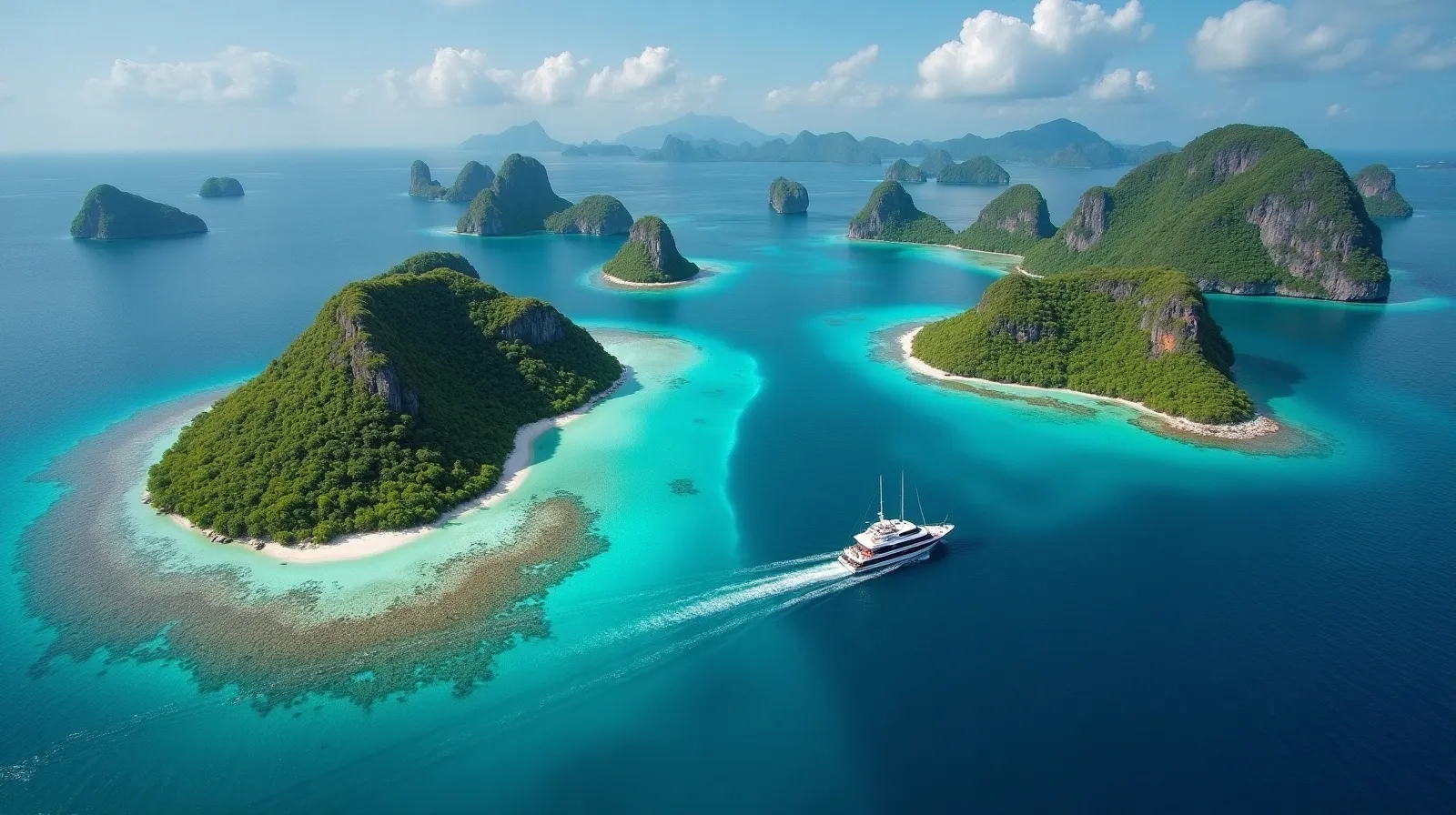
Misool is the southern quarter of Raja Ampat and its most concentrated beauty: a 40-mile barrier of drowned karst where turquoise lagoons link in sequence like rooms in a flooded palace. As route notes for the planner’s Raja Ampat gateway leg, this post covers the sailing shape of the circuit — the full destination detail belongs to the region’s specialists, and departures are best planned against established Raja Ampat liveaboard expedition programs.
The circuit in sequence
| Leg | Distance | Notes |
|---|---|---|
| Sorong → Misool east (Yellit) | ~90 nm | Overnight approach across the Sele Strait |
| Yellit → Balbulol | ~15 nm | Needle-karst lagoon, first of the sequence |
| Balbulol → Wayil & Harfat | ~12 nm | The postcard viewpoint climb, inner lagoons |
| Harfat → Tomolol cave | ~10 nm | Swim-through cathedral cave, rock-art cliffs |
| Tomolol → southeast reefs | ~20 nm | Sasi conservation waters, manta stations |
Distances inside the karst are tiny; days are shaped by tides and light rather than passages. The approach and return to Sorong are the only real sea legs.
Rock art and the cave
Misool’s limestone holds some of the Pacific’s oldest rock art — ochre hand stencils and fish figures painted on overhanging cliffs metres above the waterline, viewed by tender at slack water. Tomolol cave is the physical climax: a cathedral passage you swim through, light wells breaking the dark, with village permission arranged beforehand by your crew. Both sites sit under customary ownership; the courtesy sequence from the village protocol notes is the working rule here as much as in any kampung.
Sasi waters: conservation the local way
Southeast Misool’s reefs are managed under sasi — customary closure — reinforced by ranger patrols funded through conservation partnerships, and the biomass shows it: manta stations, walls of fusiliers, reef sharks on every dive. Yachts pay Raja Ampat’s park tariff per guest and observe no-anchor zones (moorings or drift only at the marquee sites). It is the archipelago’s clearest demonstration that protection pays, and the fee structure that funds it is summarised in our marine park fees guide.
Season, vessel and cost note
October–April is Misool’s window — the northwest monsoon paradox, calm in Raja Ampat while the south blows. Expedition phinisi dominate; the 90 nm Sorong approach and zero support inside the karst demand real autonomy. Bands run USD 3,500–15,000 per day whole-boat plus park tariffs through the APA. Westbound pairings continue to Triton Bay for the full Papua arc; the head-on destination guide for the wider region lives at our Raja Ampat gateway page.
Sequencing the lagoons: a route designer’s notes
Misool rewards sequencing more than most destinations because its rooms are tidal. Balbulol’s needle garden photographs best in morning light with the tide mid-to-high, when the turquoise floor lights the spires; Wayil’s inner lagoons want slack water for tender access through their keyhole entrances; the Harfat viewpoint climb belongs to early morning before heat, with the classic panorama at its clearest; and Tomolol cave’s cathedral swim needs the low-to-mid tide that opens headroom in the entrance passage. A well-run circuit therefore reads as a tide-table ballet — the crew shuffling the sequence daily so each room appears at its best hour — and guests who wonder why the itinerary keeps reordering are watching expertise, not indecision. Between the marquee rooms, the southeast reefs carry the diving: Boo’s windows, Magic Mountain’s manta traffic, fish walls that explain why the sasi system is defended so fiercely.
The circuit’s accommodation of weather is equally deliberate: the karst’s inner channels stay workable in most conditions, so blows that would cancel days elsewhere merely reorder them here — one of the quiet reasons Misool suits the season’s edges as well as its peak.
Practical notes for the southern circuit
- Permits: Raja Ampat environmental tags per guest plus vessel fees, arranged at Sorong before departure.
- Approach: the 90 nm Sele Strait crossing runs overnight; landfall at Yellit in morning light is the standard pattern.
- Anchoring: no-anchor discipline at marquee sites — moorings or drift; sand patches only in the channels.
- Rock art and cave visits: village permission first, small fees receipted, no touching the panels.
- Fuel and support: Sorong only — the circuit runs on complete self-sufficiency once inside.
- Connectivity: effectively none in the karst; brief guests to treat it as the feature it is.
Sequenced properly, Misool compresses more world-class scenery per mile than anywhere in the archipelago — the reason route designers guard their tide tables like recipes.
A closing note on expectations: Misool’s fame runs on drone photographs, but the circuit’s real register is intimate — tender-scale channels, cave light, reef sound through a hull at anchor. Parties who arrive chasing the aerial postcard find it in the first morning; the ones who stay curious find the better version everywhere beneath it, which is what separates a photo stop from a route worth crossing the Sele Strait for.
Quick answers
How do you reach Misool by yacht?
From Sorong: a 90 nm overnight across the Sele Strait to Misool’s eastern lagoons. Inside the karst, legs shrink to 10–20 nm and days are shaped by tide and light.
When is the season for Misool?
October to April — Raja Ampat stays calm under the northwest monsoon while southern Indonesia takes the weather. Mid-year the region becomes a lee shore and most vessels reposition.
What are sasi waters?
Reefs under customary closure by local communities, reinforced by ranger patrols. Southeast Misool’s sasi zones hold Raja Ampat’s densest fish biomass — and strict no-anchor rules.
Related briefs
Continue with Kei and Aru Islands and Forecast Tools for Indonesian Passages.
Ready to turn this into a real itinerary? Message the Indonesia Yacht Charter desk on WhatsApp +62 811-3941-4563 or email [email protected] for routes, vessels and honest USD quotes within 48 hours.
Chart your Indonesian passage
Tell us your dates, group and the water you want under the keel. The desk replies on WhatsApp with routes, vessels and an honest USD quote.